

Is quail actually safe to cook for your cat at home, and can you make it nutritionally complete without a chemistry degree?
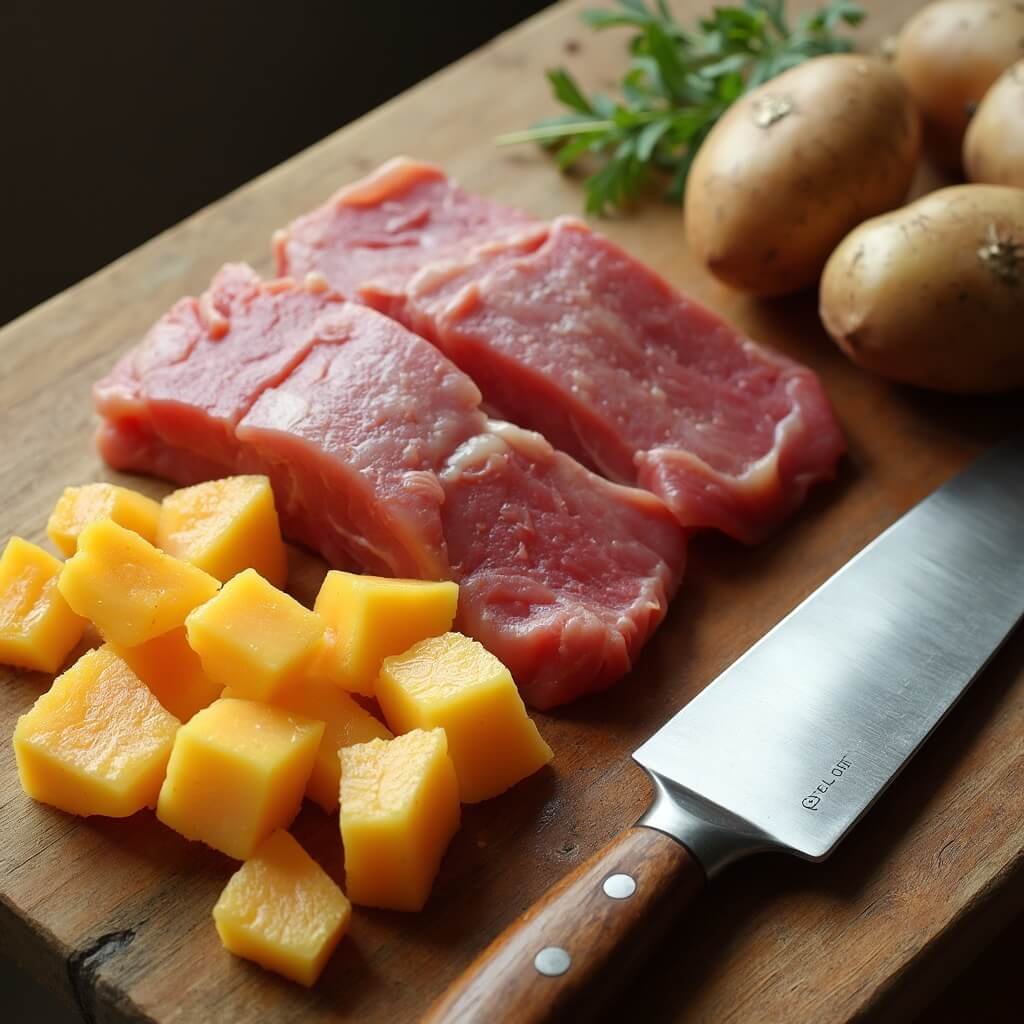
The quail sweet potato cat dinner was the bowl my cat finished first. It is a balanced cook most cats take, and the quail is the part to keep.
That’s the question I kept hitting when I started making this quail and sweet potato cat dinner for my Burmese, Mochi, after she developed a chicken sensitivity that turned every meal into a guessing game.
I’ve been cooking this recipe in rotation for about eighteen months now. It’s not a replacement for a veterinary nutritionist’s formulation if you’re going fully homemade long-term — I want to say that up front — but as a regular fresh meal alongside a balanced base diet, or as a vet-approved primary food with proper supplementation, it works. Mochi’s coat is glossier than it’s been in years, and her vet flagged her bloodwork as boring in the best way.
Here’s exactly how I make it.
Key Info
– Prep time: 10–15 minutes
– Cook time: 15–20 minutes
– Total time: 30–40 minutes (including cooling)
– Servings: 2–3 meals for a 4–5 kg adult cat
– Per meal (approx. 175 g): 210 kcal | 11 g fat | 22 g protein | 6 g carbohydrates
– Difficulty: Intermediate (cooking is easy; supplement balancing is what bumps it up)
– Dietary tags: Grain-free, gluten-free, novel protein, limited-ingredient friendly
Equipment
– Sharp chef’s knife or poultry shears
– Cutting board (I keep one just for raw poultry)
– Small saucepan or steamer basket
– Small skillet with a lid, or a covered baking dish
– Instant-read thermometer — this is non-negotiable for me with small game birds
– Measuring spoons and a kitchen scale that reads to 1 g (supplement dosing is gram-level work)
– Mixing bowl
– Fork or potato masher
– Airtight containers for storage
Optional but useful: A mini food processor if your cat prefers pâté texture. Silicone ice cube trays are how I freeze individual portions — pop one out, thaw, done.
Alternatives: No steamer? Simmer the sweet potato in shallow water and drain hard. No skillet? Cover and bake the quail with a splash of water — gentler heat keeps it moist.

Ingredients
Quantities make 2–3 meals for an average adult cat. Scale instructions are below.
For the dinner:
– 200 g boneless quail meat, thigh and breast, skin mostly on (skin = fat = flavor cats want)
– 70 g peeled sweet potato, cubed into 1–2 cm pieces
– 50–100 ml warm water or unsalted, onion- and garlic-free poultry broth
Supplements
(follow your specific product’s dosing — these are typical ranges):
– Taurine powder, ~250–500 mg per 200 g meat
– Calcium source (eggshell powder or feline calcium supplement) — boneless meat is calcium-deficient and will throw off the calcium-to-phosphorus ratio without it
– Feline multivitamin/mineral premix designed for homemade diets (covers vitamins A, D, E, B-complex, zinc, copper, iodine)
– Fish oil or algae oil for omega-3s, if not in your premix
Substitutions worth knowing:
– Duck, turkey, or rabbit work if your cat isn’t on a strict elimination diet, but then it’s no longer a true novel-protein meal.
– Pumpkin or butternut squash can replace sweet potato — pumpkin is my go-to when Mochi’s stools get soft.
What does NOT go in:
Onion, garlic, chives, leeks, salt, pepper, rosemary, vinegar, oil with seasoning, butter. Every herb and aromatic in a human quail recipe is either pointless or actively dangerous here.

Method
1. Cook the sweet potato
Drop the cubes in a steamer basket over simmering water. Steam 10–15 minutes until a fork goes through with zero resistance. If you’re simmering directly in water, drain thoroughly — waterlogged sweet potato makes a sad, slack mash.
2. Cook the quail
Trim the meat into small strips so it cooks evenly. Two methods I rotate between:
– Skillet: Add a tablespoon of water to a cold pan, lay the quail in, cover, and cook over medium-low for 6–8 minutes, flipping once. The lid is what keeps it tender.
– Oven: Place quail in a covered dish with a tablespoon of water, bake at 180°C / 350°F for about 12 minutes.
Confirm the thickest piece hits 74°C / 165°F on your thermometer. The flesh should be fully opaque with clear juices, but still glossy and yielding — not stringy. Overcooked quail goes dry and tough fast because the pieces are small.
Let it sit until just warm to the touch.
3. Mash and combine
Mash the sweet potato smooth. Finely chop the cooked quail by hand for a chunky texture, or pulse in a mini processor for pâté. Mochi prefers chunky; my friend’s senior cat will only eat pâté. You’ll learn your cat’s preference quickly.
In a bowl, fold the quail and sweet potato together with enough warm broth or water to get a soft, spoonable consistency. Think wet cat food, not stew.

4. Add supplements — after cooling
This part matters. Wait until the mixture is lukewarm (under 40°C) before adding taurine, calcium, vitamin premix, and oil. Heat degrades several of these nutrients, especially taurine and some B vitamins. I learned this the hard way after spending money on a good premix and dumping it into food that was still steaming.
Stir thoroughly. Uneven distribution means one meal gets all the calcium and the next gets none.
5. Portion and store
Divide into 75–100 g portions for an average 4–5 kg adult cat (your vet’s body-condition guidance trumps mine). Serve at body temperature, or refrigerate and warm gently before serving.
The quail sweet potato cat dinner is the bowl most cats take. The quail is the part to keep.
