

Beef Liver & Spinach Iron-Rich Cat Food
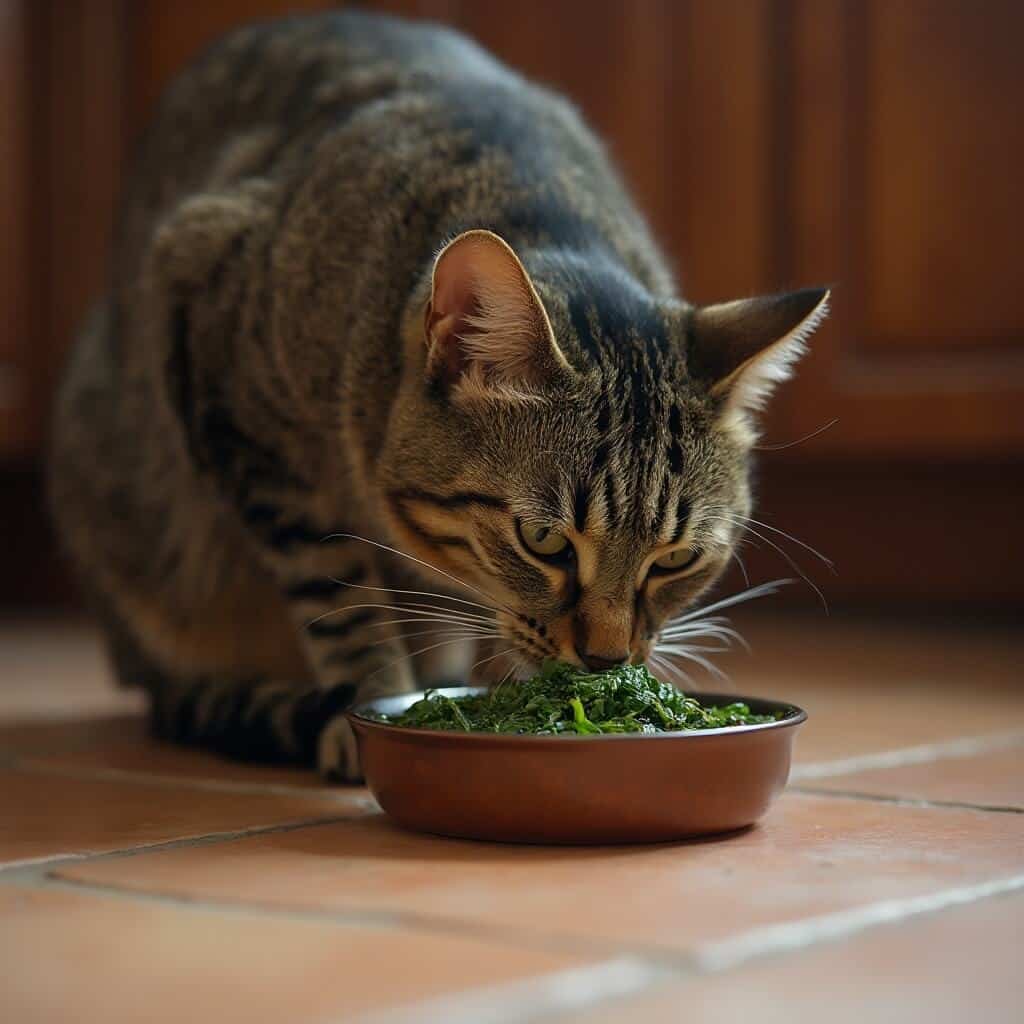
I make this beef liver and spinach iron-rich cat food when my cat, Luna, needs an iron boost after a vet check. The liver cooks quickly, and she eats it with a focus she rarely shows for other meats.
The thing most people ask me about this beef liver and spinach iron-rich cat food is whether it’s safe to feed long-term. Short answer: as an occasional meal or topper, yes. As a sole diet, no — not without a veterinary nutritionist adjusting it for taurine, calcium, and vitamin A. I started making this for my senior tabby Mira after her bloodwork came back borderline anemic and her vet suggested adding more heme iron to her rotation alongside her regular food.
It’s become a weekly batch-cook in my kitchen.
Key Info
– Prep time: 15–25 minutes
– Cook time: 10–20 minutes
– Total time: 25–45 minutes
– Servings: 6–8 cat meals
– Per portion (approx): 90 kcal · 5 g fat · 11 g protein · 1 g carbs
– Difficulty: Moderate
– Tags: Grain-free, high-protein, iron-rich, no added salt
Equipment
– Sharp knife and cutting board
– Skillet (a small saucepan works)
– Food processor or blender for pâté texture
– Digital scale — liver portion matters, eyeballing it has bitten me before
– Silicone muffin molds or small freezer containers for portioning
Ingredients
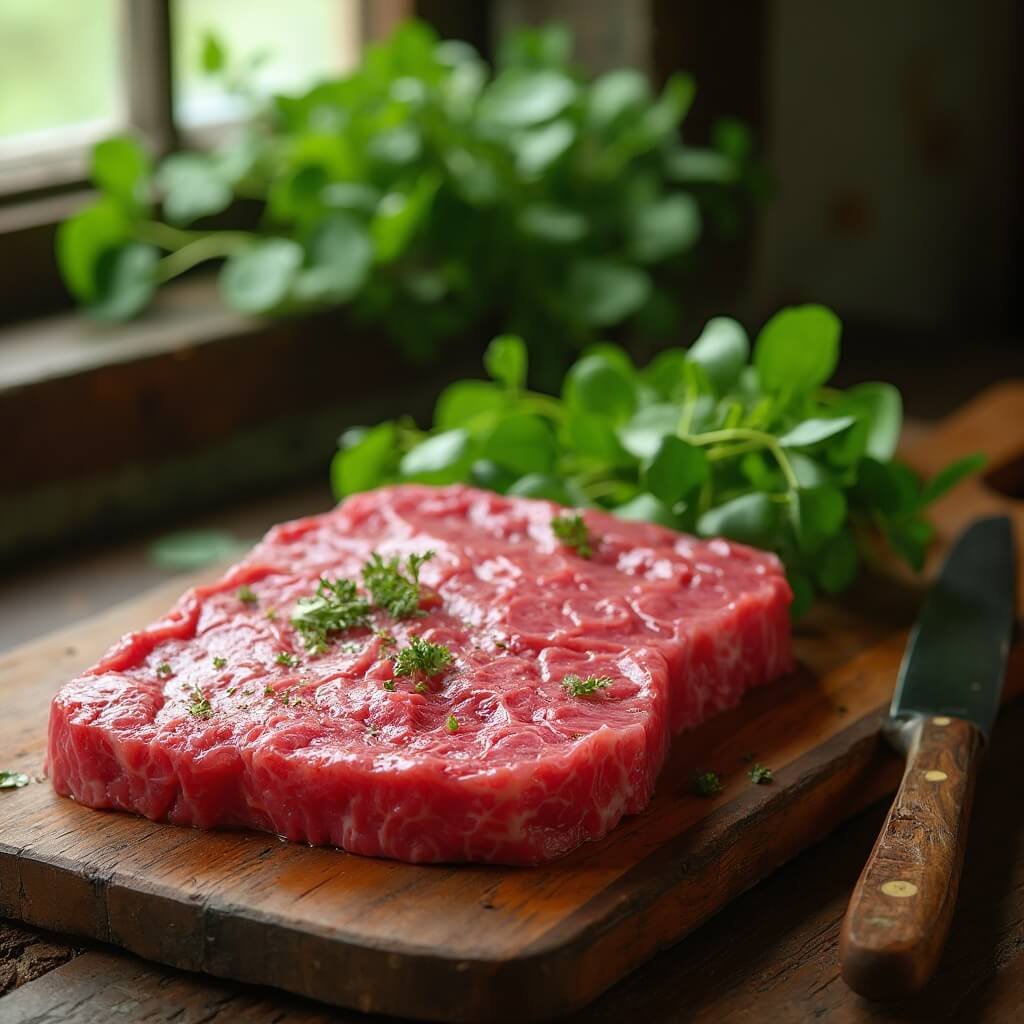
– 450 g / 1 lb ground beef (80/20 is fine; very lean dries out)
– 60–115 g / 2–4 oz beef liver, finely minced
– 1–2 cups fresh spinach, chopped (frozen works, thaw and squeeze dry first)
– 60–120 ml / ¼–½ cup water or unsalted bone broth
– Vet-approved taurine supplement, if your vet has put you on a complete-diet plan
No salt. No garlic. No onion. No “just a pinch” of anything.
Method
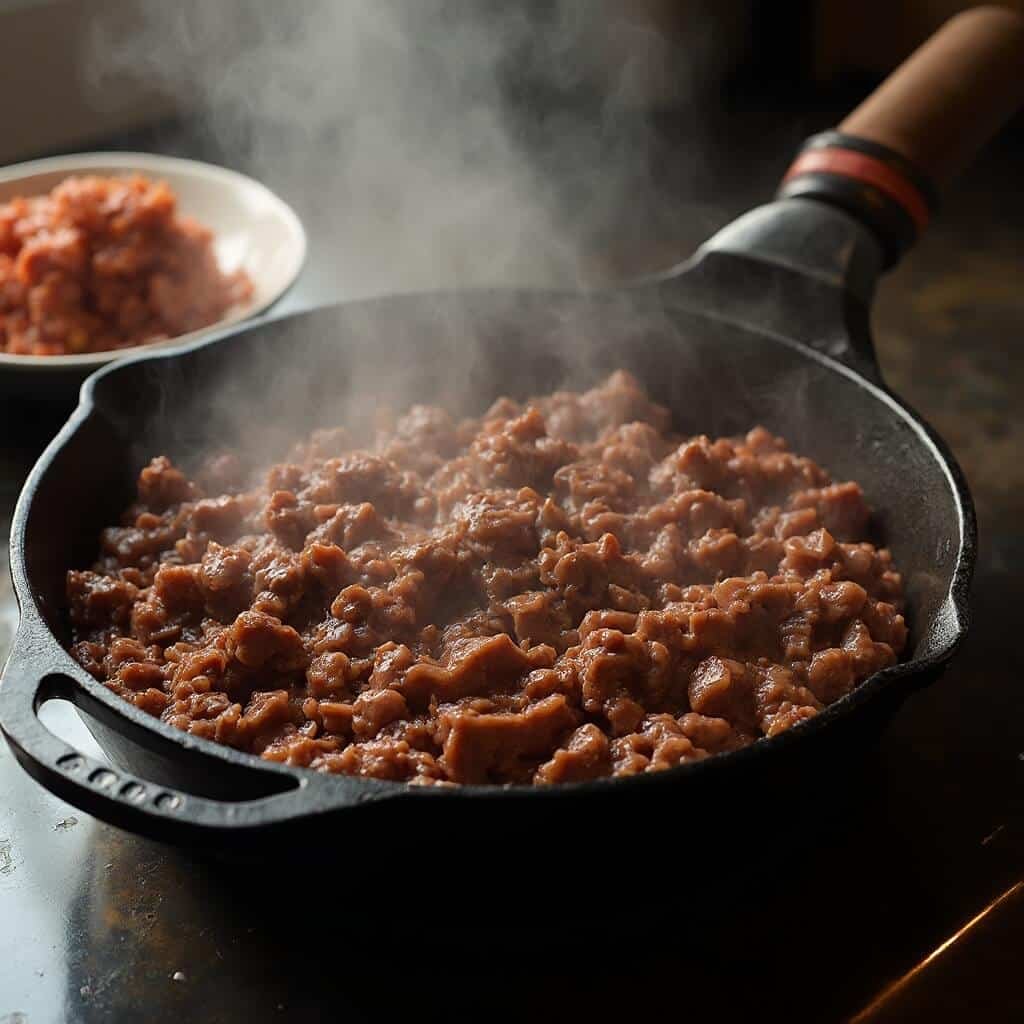
1. Warm a dry skillet over medium heat. Add the ground beef and break it into small crumbles with a spoon. Cook 5–8 minutes until no pink remains and the fat has rendered out a little.
2. Push the beef to one side. Add the minced liver to the empty side and cook 2–4 minutes, stirring, until it turns from glossy red to matte brown. Pull it before it stiffens — overcooked liver goes chalky and cats can tell.
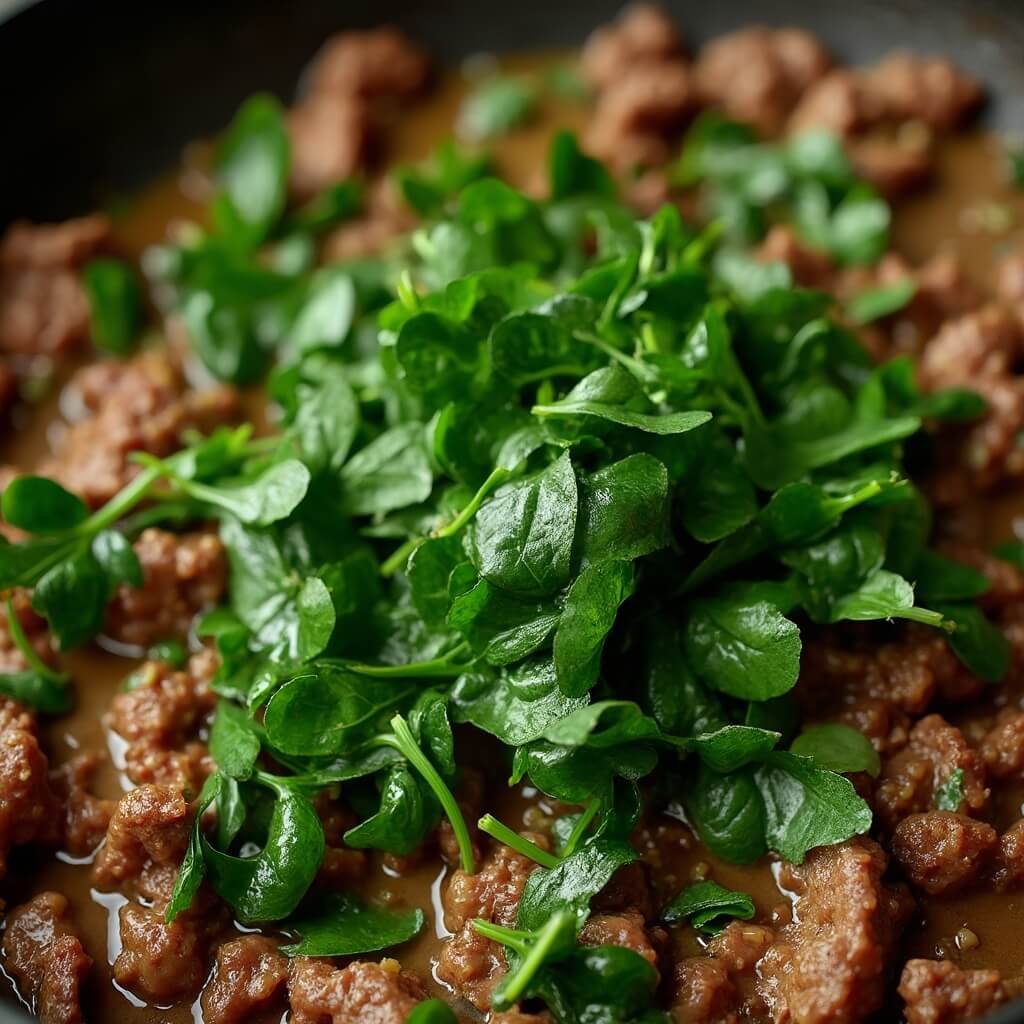
3. Tip in the spinach with a splash of water or broth. Stir 1–2 minutes until the leaves are bright green and just collapsed. Not army-green. Not soupy.
4. Take the pan off the heat. Let it cool on the counter for 15–20 minutes until it’s room temperature throughout.
5. For a pâté texture, pulse in a food processor with the pan juices in short bursts until it looks like coarse wet sand. For a chunkier mix, just stir well.
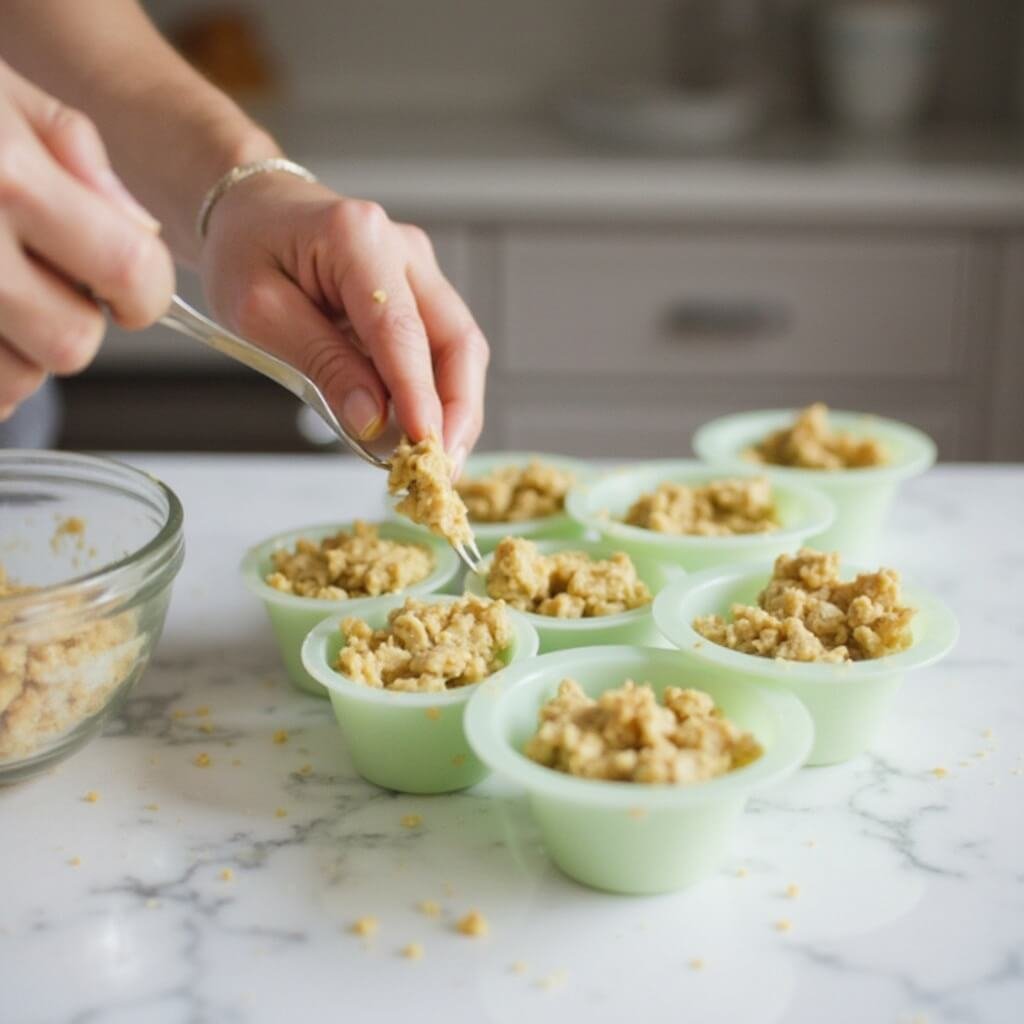
6. Portion into roughly 3–4 tablespoon servings. Refrigerate what you’ll use in two days, freeze the rest.
The first time I made this I cooked the liver with the beef from the start. Eight minutes in, it was rubber. Mira walked away. Now I add the liver halfway through, and the bowl comes back clean.
Why the Ratios Matter
Liver is dense with vitamin A and copper. Too much, too often, and you push past safe levels. I keep liver at roughly 10–15% of the total meat weight — about 60 g per 450 g of beef for regular feeding. Spinach is supportive, not the headline: cats absorb non-heme plant iron poorly, so the real iron is coming from the beef and liver. Treat the greens as moisture, fiber, and a small mineral boost.
Crucial Tips
– Storage: 2–3 days refrigerated in a sealed container. Up to 2 months frozen. Label with the date — frozen cat food all looks identical at month two.
– Reheating: Thaw in the fridge overnight, then warm to just barely above room temp. Stir hard to kill any microwave hot spots.
– Scaling: Double or triple the muscle meat and spinach freely. Keep liver at the same proportion, not more.
– Common mistakes: Adding broth that contains onion or garlic (read the label twice), overcooking until dry, leaning on spinach as the iron source.
– Variations I rotate: kale instead of spinach for a milder bitterness; pumpkin purée swapped in for spinach when Mira’s stool needs firming; a smoother pâté blended with extra broth for older cats with fewer teeth.
– Not a complete diet on its own. Use it as a topper or rotational meal unless a veterinary nutritionist has balanced the full formula for you, including taurine and calcium.
If your cat has been flagged for low iron, talk to your vet before changing diet. This recipe supports — it doesn’t treat.
The beef liver spinach iron rich cat food is the bowl most cats take. The liver is the part to keep.
I store the leftovers in the fridge for up to two days since liver spoils quickly. Luna eats about a quarter cup twice a day, and the batch usually lasts us two days.
