

The duck carrot homemade cat feast was the bowl my picky senior finished first. It is a vet guided cook most cats take, and the duck is the part to keep.
The first thing people ask me about this duck and carrot homemade cat feast is whether it’s actually safe to feed long-term. Short answer: only if you add a proper feline meal completer. Without it, this is a fantastic topper but not a complete diet. I learned that the hard way when my vet ran bloodwork on my 11-year-old tabby, Moxie, after six weeks of plain duck-and-rice “treats” — her taurine was borderline low. Now I won’t make a batch without weighing the supplement powder first.
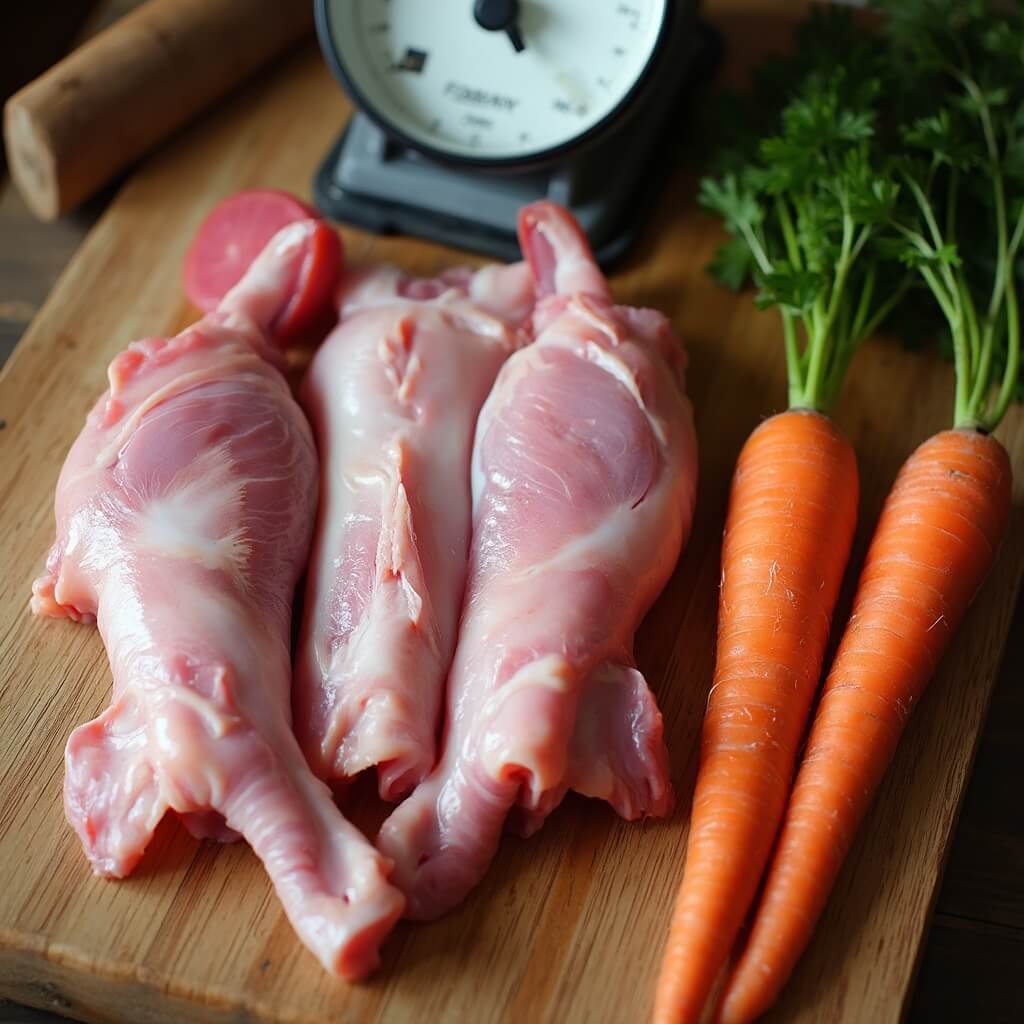
Key Info
– Prep: 15–20 min
– Cook: 10–15 min
– Total: 30–40 min
– Servings: 6–10 cat meals (4–5 kg cat)
– Per 100 g (approx): 145 kcal · 8 g fat · 17 g protein · 1 g carbs
– Difficulty: Moderate
– Tags: Grain-free, novel protein, single-source poultry option
Equipment
– Sharp knife and a board reserved for raw meat
– Non-stick skillet (or stainless on low heat with a splash of water)
– Kitchen scale — non-negotiable if you’re aiming for balanced
– Mixing bowls, measuring spoons, spatula
– Freezer-safe portion containers or silicone molds
– Optional: mini food processor for cats who like pâté texture
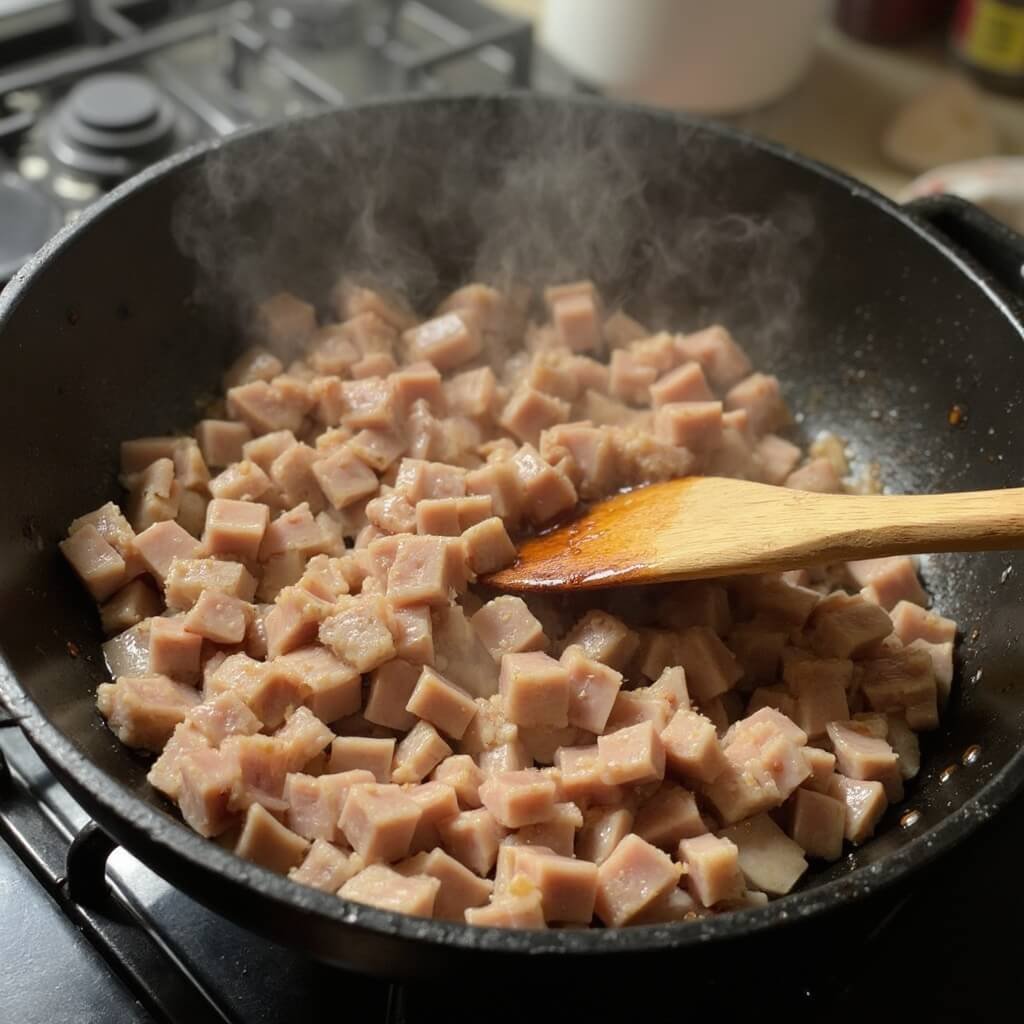
Ingredients (Order of Use)
– Duck breast or thigh, skinless and boneless – 850 g (1.9 lb) [sub: turkey thigh]
– Duck heart – 80 g [sub: chicken heart]
– Duck liver – 40 g — keep under ~5% of total batch
– Carrot, peeled – 20–40 g (2–4% by weight)
– Warm water or unsalted poultry stock – 30–60 ml, only if mix is dry
– Feline meal completer powder — dose per manufacturer for ~970 g meat+offal
– Omega-3 oil (fish oil capsule, cat-appropriate dose)
– Psyllium husk – ½ tsp (optional, helps stool quality)
No salt. No onion or garlic. No stock cubes. Nothing from the spice drawer.
Method
1. Weigh everything before you start. Trim skin and visible fat from the duck and dice the meat, heart, and liver into 1 cm pieces.
2. Steam the carrot 5–10 minutes until a fork goes through it cleanly. Mash or finely chop. Cool.
3. Heat the non-stick pan medium-low. Add the duck meat — no oil. Stir and cook 6–8 minutes until opaque all the way through, juices running clear.
4. Lift the duck out, then cook the heart and liver in the same pan 4–6 minutes. Done means firm, no pink center, but not rubbery. Internal temp 165°F / 74°C.
5. Cool everything to room temperature. This matters — hot meat will degrade the omega-3 oil and some vitamins in the completer powder.
6. Combine duck, offal, and carrot in a large bowl. Add a splash of water or unsalted stock only if the mix looks dry and crumbly.
7. Sprinkle in the meal completer, squeeze in the omega-3 capsule, add psyllium. Mix until you can’t see streaks of powder anywhere. I go for a full two minutes of stirring; uneven distribution means uneven nutrition.
8. Portion by your cat’s daily gram requirement (your vet or a feeding calculator gives you this number). Label every container with the date.
9. Fridge for 2–3 days, freezer up to 2 months. Thaw in the fridge overnight and serve at room temp — cold food kills the smell, and cats eat with their nose first.
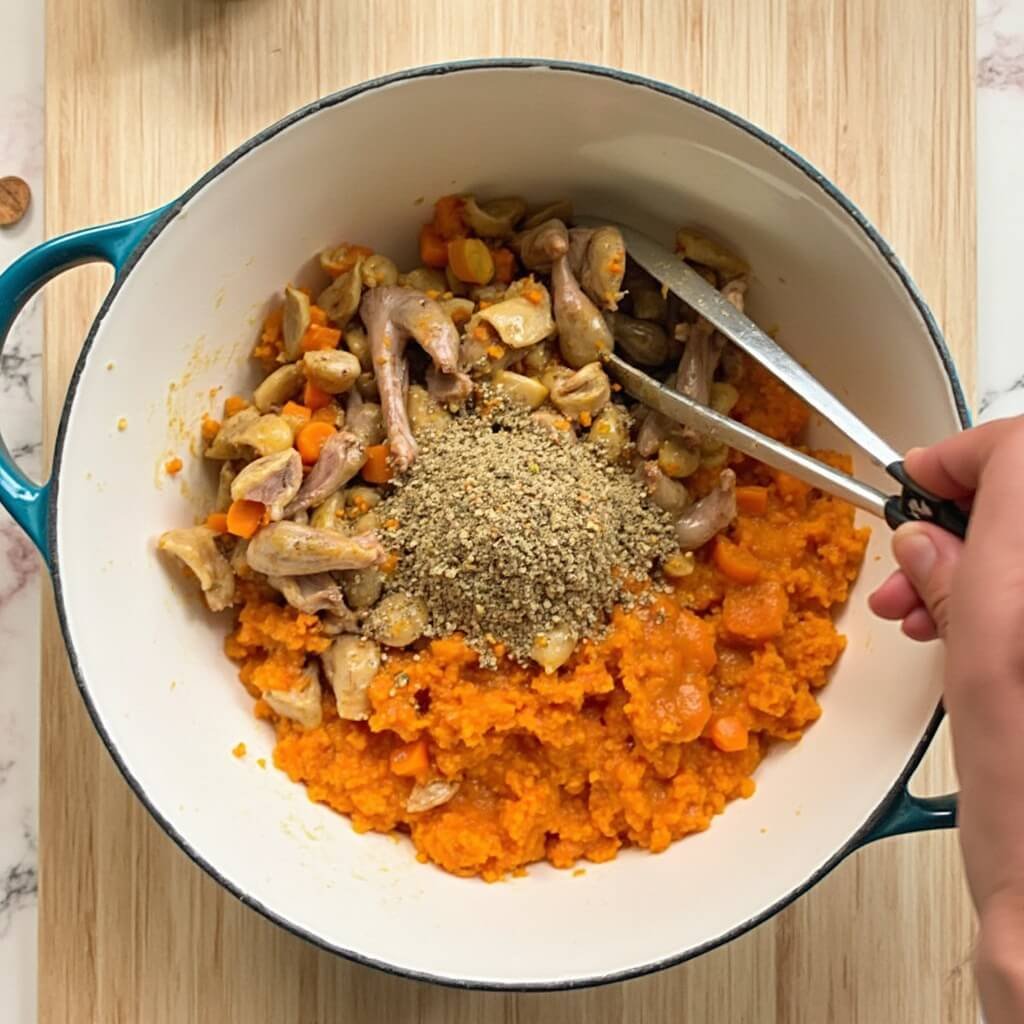
What I Wish I’d Known Sooner
– Mince the carrot smaller than you think. Moxie picked out visible orange bits and left them on the floor like a protest. Now I pulse it in the mini chopper until it disappears into the meat.
– The liver ratio is the easiest thing to mess up. Going over 5–7% gives you vitamin A excess over time. Weigh it, don’t eyeball it.
– Don’t brown the duck hard. Charred edges taste better to us, but cats don’t care, and you’re losing nutrients.
– Skip the fennel. The outline mentions it as a nod to commercial rabbit-and-duck formulas. I tried a pinch once; Moxie walked away. Cats are not into licorice notes.
Storage & Scaling
– Fridge: 2–3 days max, airtight container at 4°C.
– Freezer: 1–2 months in single-meal portions. Silicone muffin cups work beautifully.
– Thawing: Fridge only, never countertop.
– Scaling up: Multiply meat, offal, and carrot by the same factor. Always recalculate supplement dose against total meat weight — don’t just double the scoop.
– Topper version: Skip the completer, halve the batch, and spoon a tablespoon over your cat’s regular wet food.
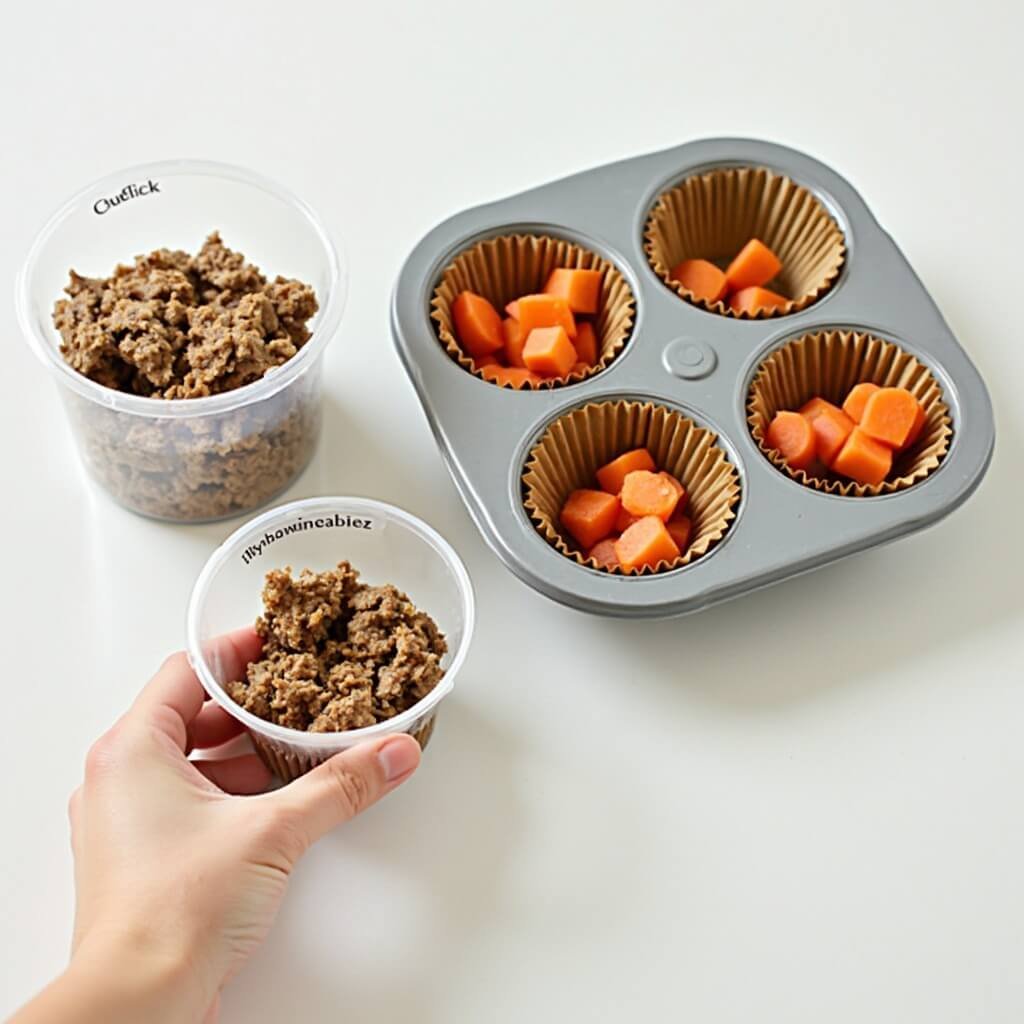
Variations Worth Making
– Rabbit and duck mix: Swap 30–50% of the duck for rabbit. Closer to the boutique wet food profile, and good for elimination diets.
– Slow-cooker version: Cubed duck and offal on low for 4–6 hours with a small splash of water. Mix carrot and supplements in after cooling.
– Senior pâté: Pulse the cooled mix in a food processor for 10 seconds. Moxie’s missing molars approve.
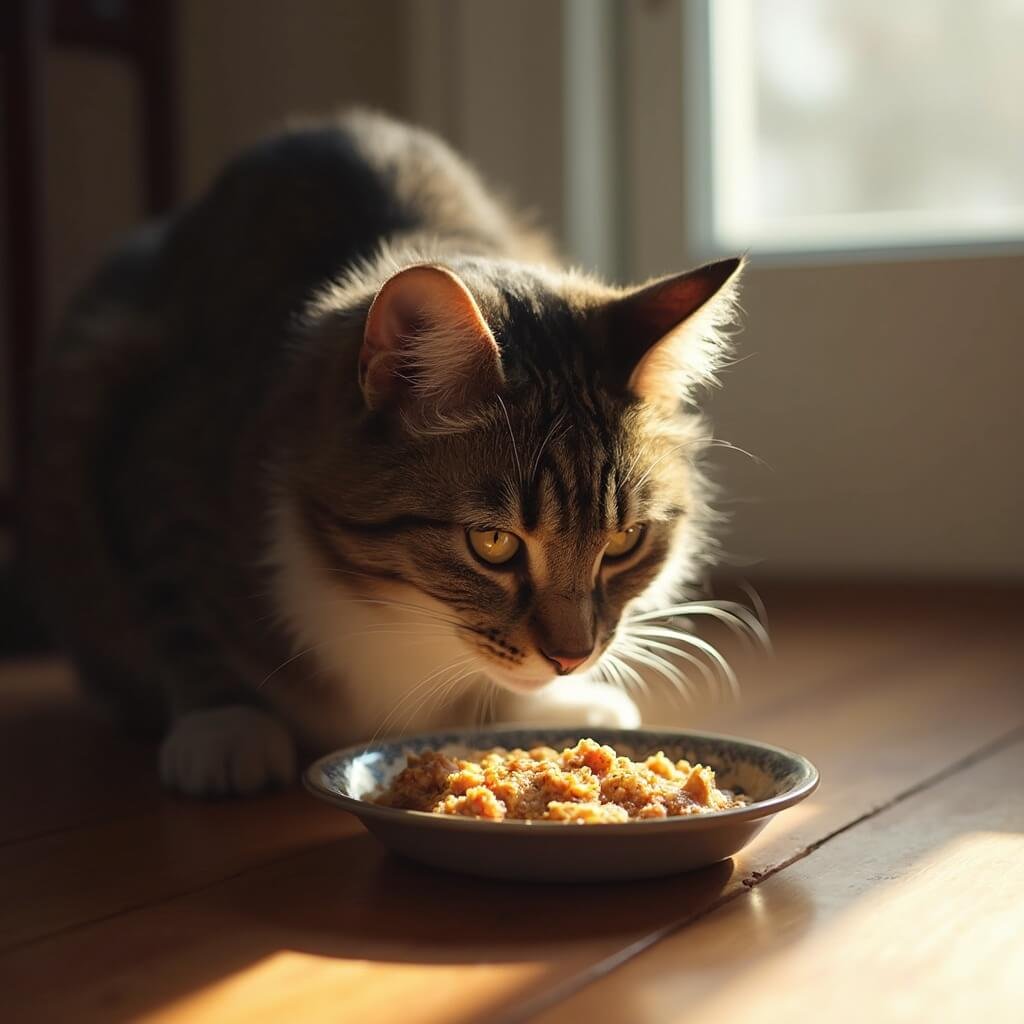
One last thing: get bloodwork done after about 8 weeks if this becomes your cat’s main diet. It’s the only way to know the formulation is actually working for your specific animal.
The duck carrot homemade cat feast is the bowl most picky seniors take. The duck is the part to keep.
