

Chicken & Kale Vitamin Boost for Cats: A Homemade Topper Recipe
The chicken kale vitamin boost for cats was the topper my cat finished first. It is a plain cook most cats take, and the kale is the part to keep.
Is kale actually safe for cats, and can you mix it with chicken without wrecking the nutritional balance of their main food? Yes to both — as long as this chicken and kale vitamin boost stays in its lane as a topper, not a meal replacement. I started making this for my older tabby, Miso, after her vet suggested adding some omega-3s and antioxidants to her bowl. She refused the fish oil capsule trick. She did not refuse this.
A note before the recipe: this is a supplement to AAFCO-complete cat food, not a stand-in for it. Cats need taurine, specific mineral ratios, and vitamins in amounts you can’t eyeball from a chicken thigh.
Key Info
– Prep: 10–15 min
– Cook: 5–10 min
– Total: 20–25 min
– Yields: 8–12 topper portions (1–2 tbsp each)
– Per portion (approx): 25 kcal · 1.5 g fat · 3 g protein · <1 g carbs
– Difficulty: Moderate
– Tags: Grain-free, limited-ingredient, high-protein
Equipment
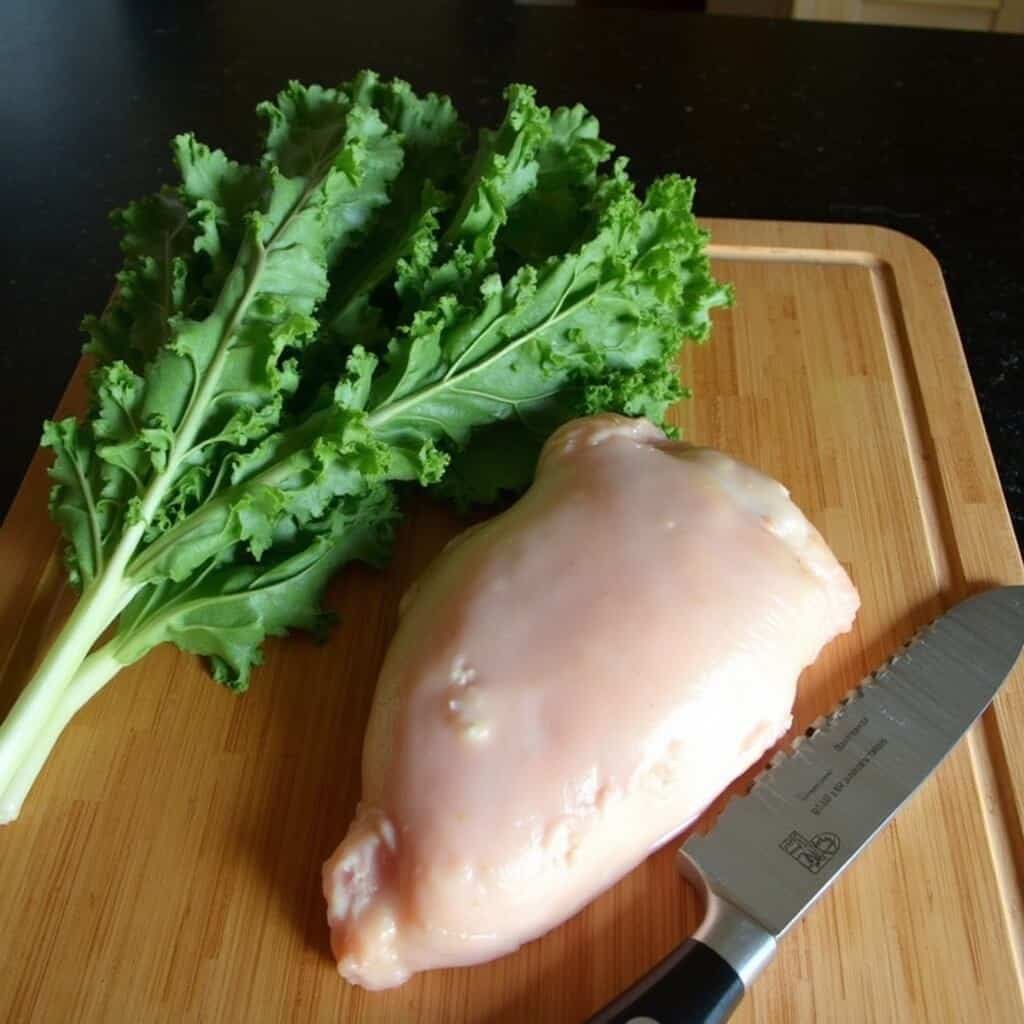
– Sharp knife and a board you’ll sanitize after raw poultry
– Small saucepan
– Steamer basket (or just blanch the kale in boiling water)
– Mixing bowl, measuring spoons, kitchen scale
– Silicone ice cube tray or small freezer containers for portioning
– Mini food processor if your cat picks greens out (mine does)
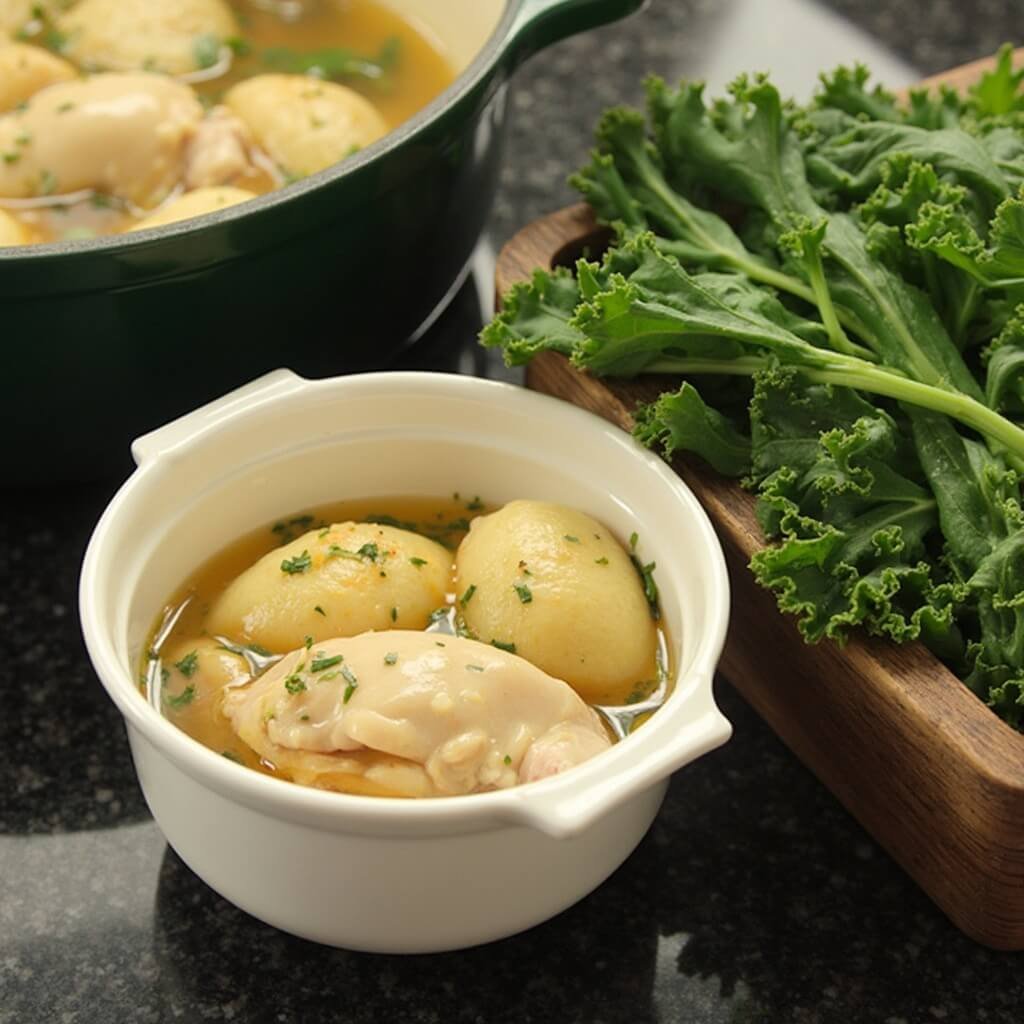
Ingredients
In order of use:
– 200 g (7 oz) boneless, skinless chicken thigh — thigh beats breast here; more fat, better palatability
– 15 g (about ¾ cup loose) fresh kale, stems stripped
– 1–3 tbsp water or low-sodium, onion- and garlic-free broth
– 250–500 mg taurine powder (cooking degrades taurine; this is insurance)
– One fish oil capsule providing roughly 250–500 mg combined EPA+DHA (use algae oil if your cat reacts to fish)
– 20–40 IU vitamin E — non-negotiable when you add omega-3 oils, otherwise the oils oxidize
Optional: 1–2 tsp plain pumpkin puree for fiber, or swap half the kale for spinach if your cat finds kale too bitter.
Method
1. Strip the kale stems and discard them. The stems are tough and the goitrogenic compounds concentrate there. Wash the leaves.
2. Cube the chicken into roughly 1 cm pieces. Smaller pieces cook faster and you keep more moisture in.
3. Poach the chicken. Put it in the saucepan with a spoonful of water, lid on, medium-low heat. Cook 6–8 minutes, stirring once or twice, until the pieces are opaque all the way through and juices run clear. Internal temp should hit 74 °C / 165 °F. Don’t brown it — you want it moist, not seared.
4. Steam the kale for 1–2 minutes, just until it goes bright green and softens. Cooking it matters: raw kale is harder on feline digestion and the cooking knocks back the goitrogens. Drain and squeeze out the water with your hands. Really squeeze.
5. Mince the kale finely, or pulse it in a mini chopper. Big leaf pieces get flicked out of the bowl. I learned this the hard way after finding kale confetti around Miso’s mat for three days straight.
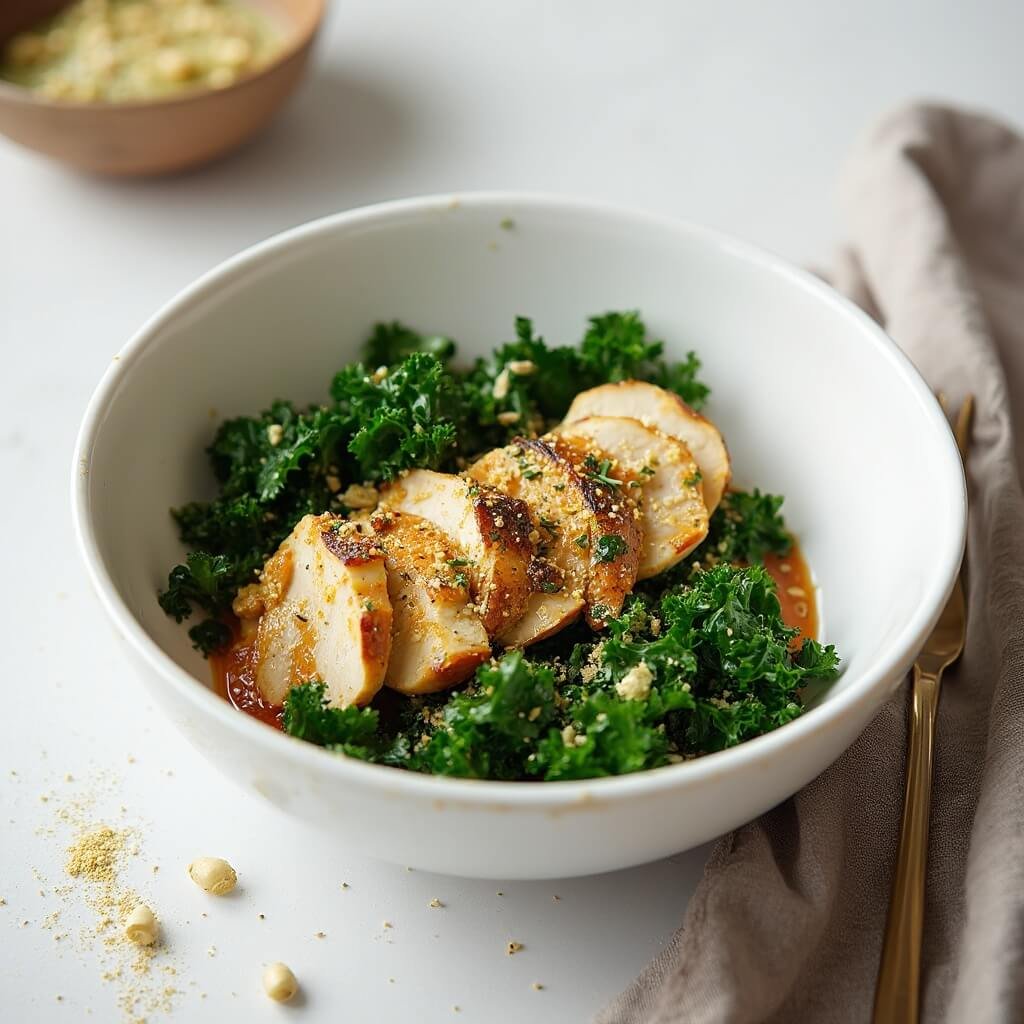
6. Cool the chicken to lukewarm. Heat destroys some supplement potency, especially the oils.
7. Combine. Stir chicken and minced kale together until the green is evenly distributed.
8. Add supplements: sprinkle in the taurine, then the oil and vitamin E. Mix until there are no oily pockets.
9. Adjust texture with broth or water — moist and scoopable for a topper, fully blended for a lickable mat treat.
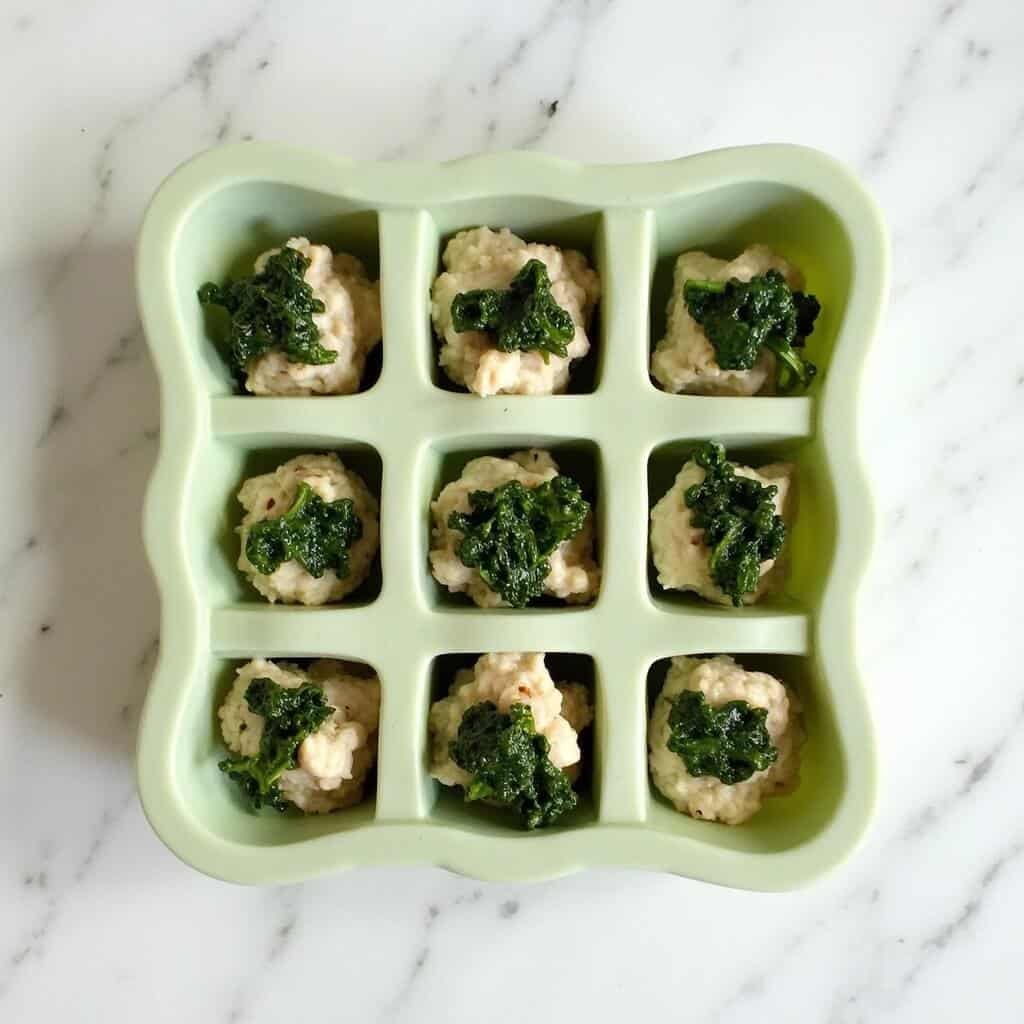
10. Portion into a silicone tray, 1–2 tbsp per cube. Cool to room temp, then refrigerate or freeze.
Serving
Start with 1–2 teaspoons mixed into the regular food for the first few days. Watch the litter box. If stools stay normal, work up to one full portion (1–2 tbsp) per day, sitting on top of complete-and-balanced food.
Crucial Tips
– Storage: 2–3 days in the fridge, 1–2 months frozen. Label the cubes.
– Thaw overnight in the fridge. Warm in a water bath, never hot.
– Never use broth with onion or garlic. Both are toxic to cats, even in small amounts.
– Don’t scale supplements linearly without weighing. Double the chicken if you want, but recheck taurine and vitamin E dosing against the new batch weight.
– Skip the kelp unless you’re working with a vet nutritionist. Iodine overdose is a real risk.
– If your cat has thyroid disease, kidney disease, or known food allergies, talk to a board-certified veterinary nutritionist before this becomes a routine.
– Picky cat? Drop the kale to 10 g and blend the whole thing into a paste. Pipe it onto a lick mat. The texture conversion converted Miso.
– Variation worth trying: add 1 tsp pumpkin puree for cats with sluggish digestion. It mellows the kale flavor too.
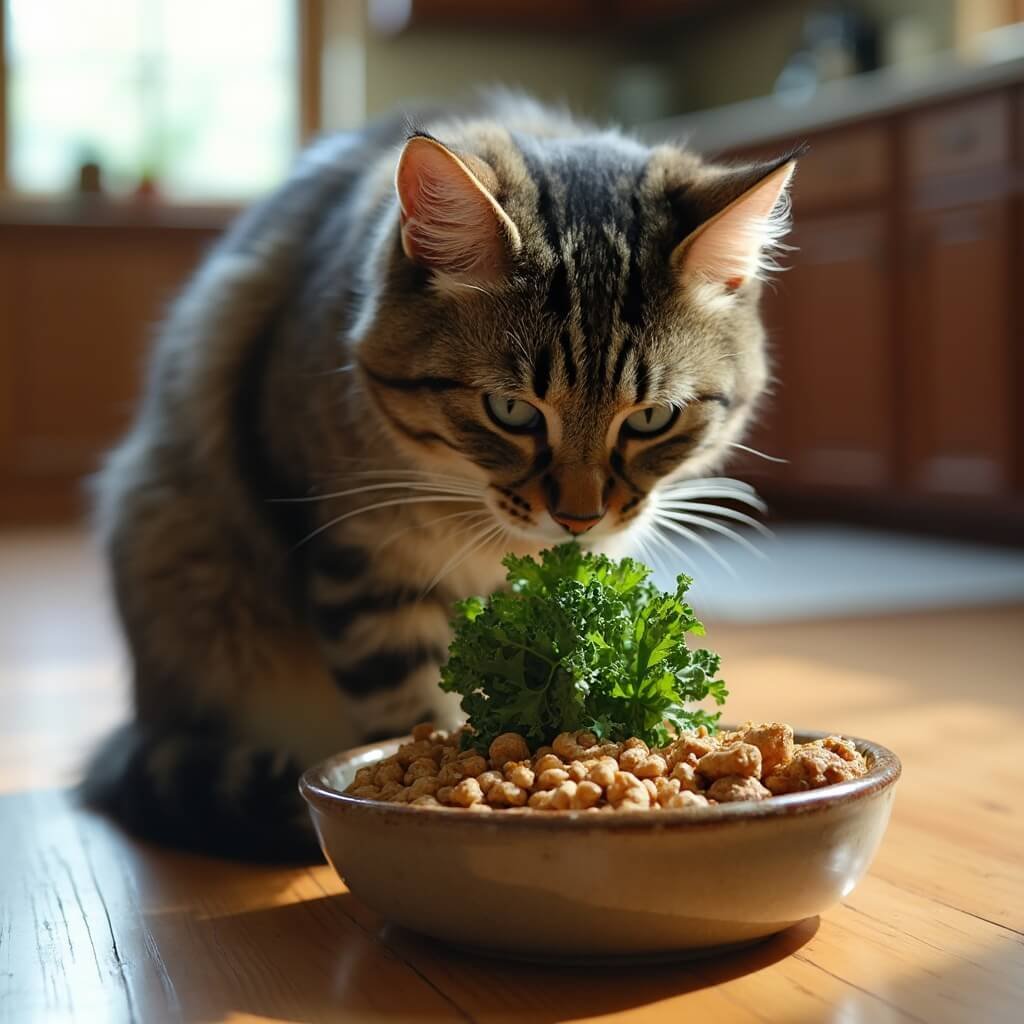
The chicken kale vitamin boost for cats is the topper most cats take. The kale is the part to keep.
