

Chicken & Sardine Omega-3 Mix for Dogs (My Weekly Batch Recipe)
The chicken sardine omega 3 mix for dogs was the batch my dog finished first. It is a plain cook most dogs take, and the sardine is the part to keep.
Is a homemade chicken and sardine omega-3 mix for dogs actually safe to feed regularly, or are you better off just buying a bag of premium kibble? After two years of making this for my rescue terrier mix, Juno, whose coat went from dull and flaky to genuinely glossy within about six weeks, I’d say yes — with the right ratios and a calcium source you don’t skip.
This is the exact batch I make every Sunday.
Key Info
– Prep time: 15–20 minutes
– Cook time: 10–15 minutes
– Total time: 30–35 minutes
– Yields: ~900 g (3–5 medium-dog meals, 6–8 small-dog meals)
– Approx. per 100 g: 145 kcal | 7 g fat | 17 g protein | 3 g carbs
– Difficulty: Easy–moderate
– Dietary tags: Grain-free, gluten-free, no added salt, high omega-3
Equipment
– Sharp knife and cutting board
– Digital kitchen scale (volume guesses ruin the calcium ratio — get a £10 one)
– Steamer basket or small pot
– Large mixing bowl
– Silicone muffin tray or freezer containers for portioning
– Food processor (optional — useful for small dogs or seniors)

Ingredients
In order of use:
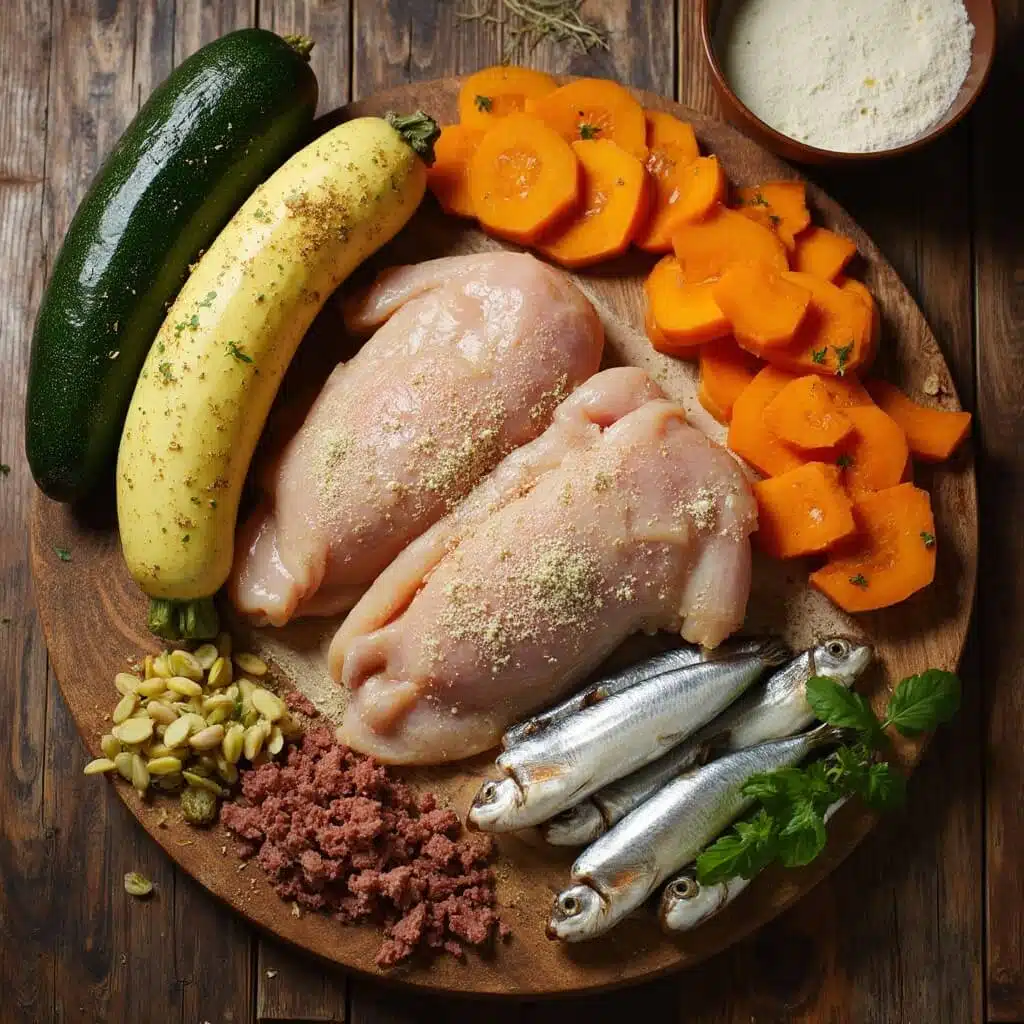
– Pumpkin, peeled and cubed — 75 g (2.6 oz)
– Sweet potato, peeled and cubed — 40 g (1.4 oz)
– Zucchini, diced — 40 g (1.4 oz)
– Skinless chicken thigh, diced — 275 g (9.7 oz) (thigh holds moisture better than breast)
– Chicken gizzards, chopped — 120 g (4.2 oz)
– Chicken liver, diced — 75 g (2.6 oz) (don’t go over this — vitamin A piles up fast)
– Sardines in spring water, no salt — 120 g (4.2 oz), drained
– Ground eggshell powder — 5 g (about 1 tsp)
– Ground flaxseed — 5 g (1 tsp)
– Kelp powder — 0.5 g (a small pinch)
Sub turkey thigh 1:1 for chicken if your dog itches on poultry — Juno’s foster sibling does better that way.
Method
1. Steam the vegetables first. Pumpkin, sweet potato, and zucchini together in the basket, 8–10 minutes, until a fork slides through with no resistance but the cubes still hold shape. Mash roughly with a fork.
2. Cook the chicken and gizzards. Drop into simmering water, 8–12 minutes, until the chicken is opaque all the way through with no pink center and the juices run clear. Internal temp should hit 74°C / 165°F. Drain.
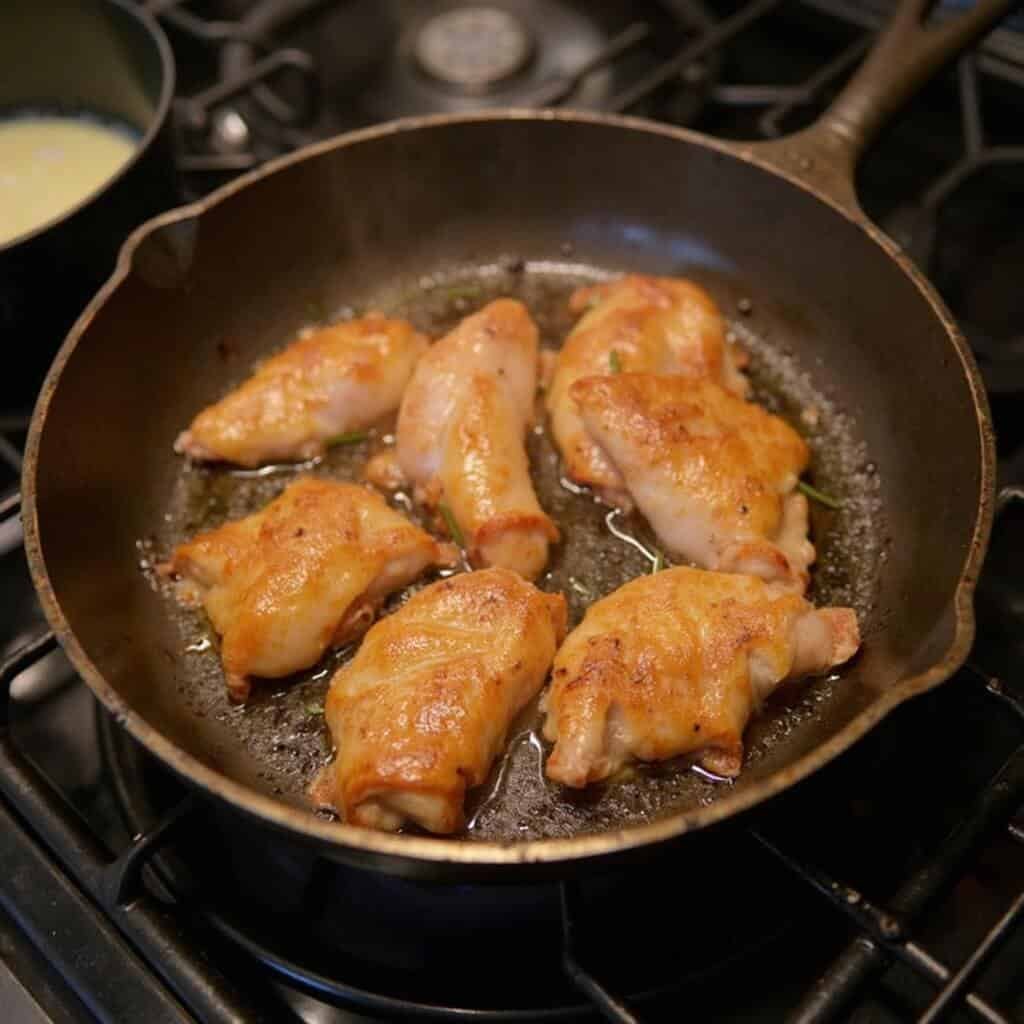
3. Sear the liver briefly. About 90 seconds per side in a dry pan — just enough that the outside firms up and the inside stays barely pink. Overcooked liver turns chalky and dogs eat around it.
4. Cool everything to room temperature. This matters. Mixing sardine oil into hot chicken oxidizes the omega-3s you’re paying for.
5. Drain and chop the sardines. The bones are soft and stay in — they’re part of the calcium picture. Break up any larger spine pieces with your fingers.
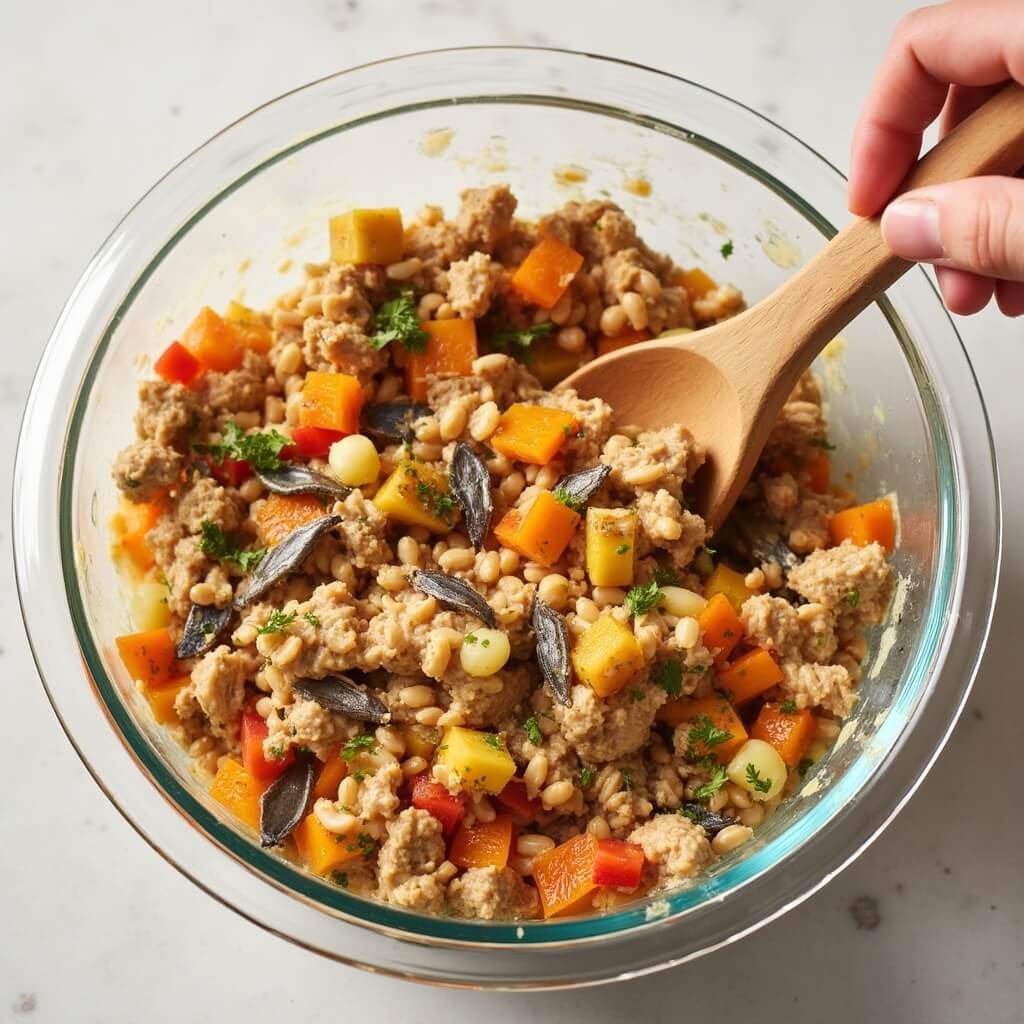
6. Combine in the big bowl. Mashed veg, chicken, gizzards, liver, sardines. Fold together until you can’t see any single ingredient dominating one corner.
7. Add the supplements last. Eggshell powder, flaxseed, kelp. Mix for a full minute — clumps of eggshell are the most common mistake I see in homemade dog food.
8. Portion and store. Pack into silicone muffin cups or containers based on your dog’s meal size. Refrigerate what you’ll use in 2–3 days; freeze the rest flat.

What I Learned the Hard Way
The first batch I made, I used sardines packed in olive oil because that’s what was in the cupboard. Juno had loose stools for three days. Only buy sardines in spring water, unsalted. Read the tin twice.
I also tried skipping the eggshell once when I ran out, telling myself “it’s just one week.” Don’t. The calcium-to-phosphorus ratio in a meat-heavy mix without a calcium source is genuinely bad for dogs long-term, not just a theoretical worry.
Crucial Tips
– Transition slowly. Mix 25% of this with 75% of your dog’s current food for two days, then 50/50 for two days, then 75/25. A hard switch = diarrhea, every time.
– Don’t microwave to reheat. Warm water bath or 20 minutes on the counter. Microwaves destroy EPA/DHA and create scalding pockets.
– Freeze within 24 hours for portions you won’t eat through fast. Omega-3s oxidize in the fridge faster than people think — 2–3 days max.
– Watch the liver. 50–100 g per batch is the ceiling. More and you risk vitamin A toxicity over months.
– As a topper instead of full meal: use about 20–30% by weight over kibble, and cut the kibble by the same amount so you’re not just adding calories.
– Skip this recipe entirely if your dog has pancreatitis, kidney disease, or is on a prescription cardiac diet. Talk to your vet first.
– Variation I rotate in: swap chicken for turkey thigh and add a tablespoon of cooked oats — useful when sardines are the only constant and you want protein variety across the month.
Juno gets one portion morning and night, weighed to 180 g each. Six weeks in, the vet asked what I’d changed.
The chicken sardine omega 3 mix for dogs is the batch most dogs take. The sardine is the part to keep.
