

Quick Facts
The sardine egg high protein cat meal was the topper my cat finished first. It is a two ingredient cook most cats take, and the sardine is the part to keep.
Prep time: 10 minutes
Cook time: 10–15 minutes
Total time: 25–30 minutes (with cooling)
Servings: 20–30 small bites
Per bite (approx.): 12 kcal | 0.7 g fat | 1.4 g protein | 0 g carbs
Difficulty: Very easy
Dietary tags: Grain-free, dairy-free, gluten-free, single-protein-pair, high-protein, omega-3 rich
Not vegetarian. Not complete & balanced.
Equipment
– Small bowl or blender (immersion blender works just as well)
– Fork, if you’re going chunky
– Baking sheet lined with parchment or a silicone mat
– ½ teaspoon measure for portioning
– Oven
No blender? Mash the sardines hard with a fork until the bones break down completely, then beat the egg in. The bones are soft — they crush easily and they’re where most of the calcium lives.
Ingredients
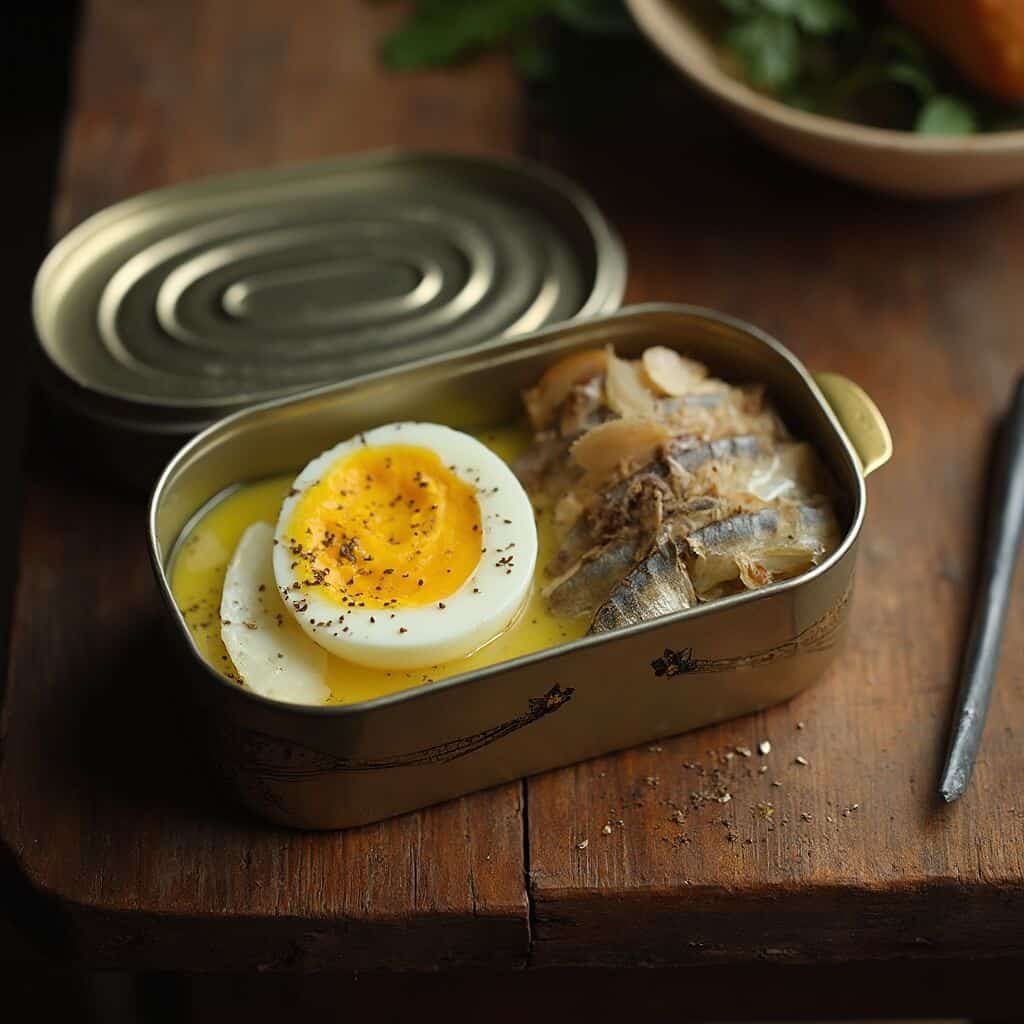
1. 1 can sardines in water, no salt added (3–3.75 oz / 85–106 g) — drain most of the liquid for firmer bites, keep it in for a softer pâté
2. 1 large egg — must be fully cooked before serving
3. 1–3 tbsp water or plain bone broth (only if the mix is too thick to spoon) — no onion, no garlic, no salt
That’s the whole list. I tried adding a teaspoon of nutritional yeast once thinking Mose would like the umami. He didn’t. Sardines and egg, nothing else.
Method
1. Preheat oven to 350°F (175°C) and line a baking sheet with parchment.
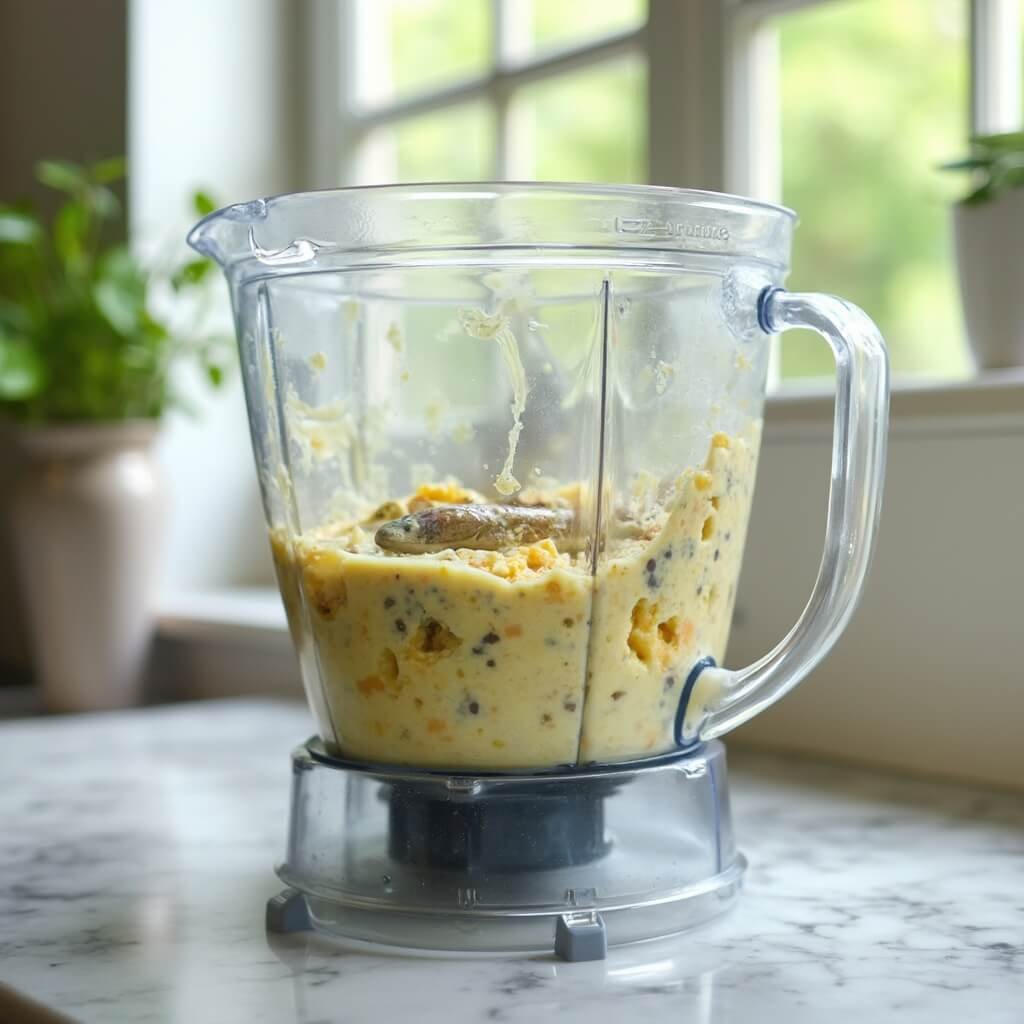
2. Drain the sardines. Tip them into your blender or bowl.
3. Crack the egg in on top.
4. Blend until smooth, about 20 seconds. For a chunkier texture cats with teeth issues sometimes prefer, mash with a fork instead.
5. If the mix won’t drop off a spoon cleanly, add water or broth one tablespoon at a time.
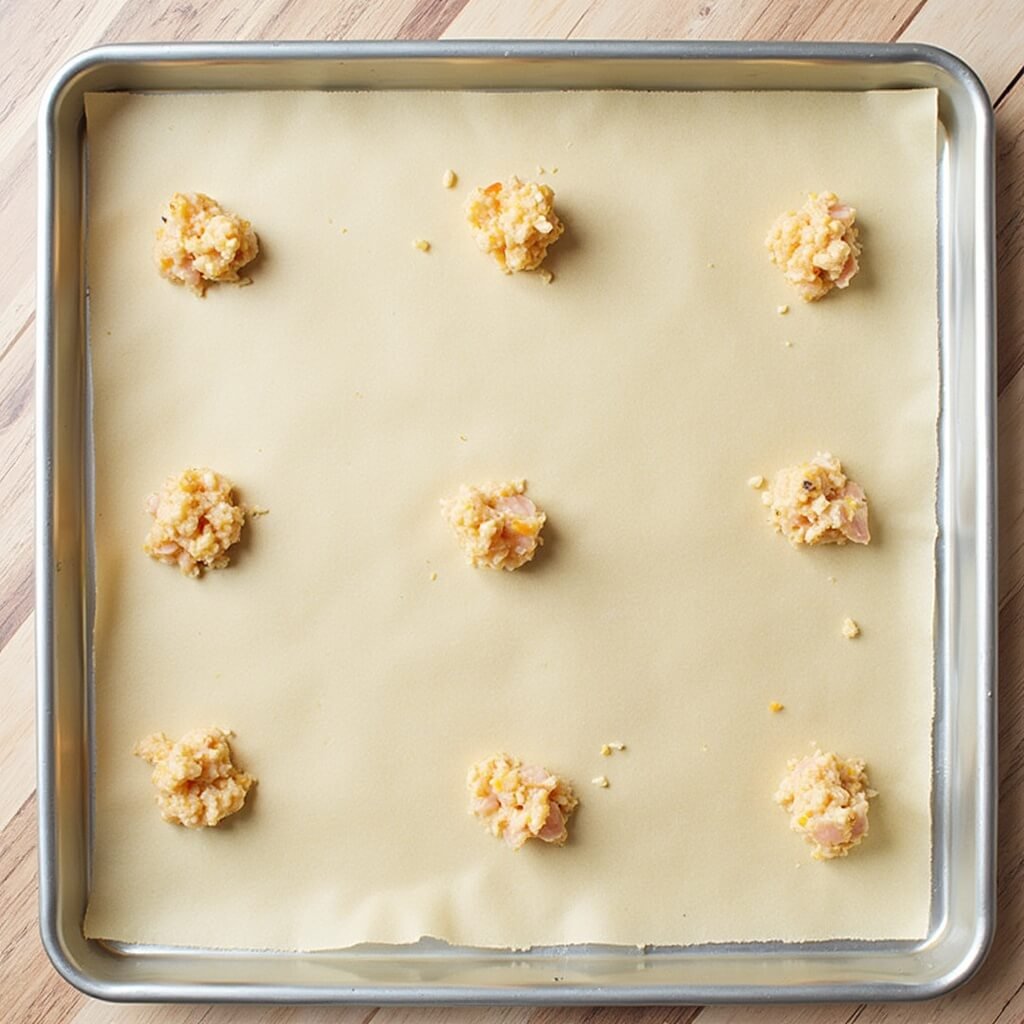
6. Spoon ½ teaspoon portions onto the parchment, spacing them a finger-width apart. They puff slightly and settle as they cool.
7. Bake 10–15 minutes at 350°F. Pull them when the tops look matte and dry, edges just starting to go golden, and small cracks appear across the surface. If you press one gently it should spring back, not squish.
8. Cool completely on the tray. They firm up as they sit — don’t judge doneness while they’re hot.
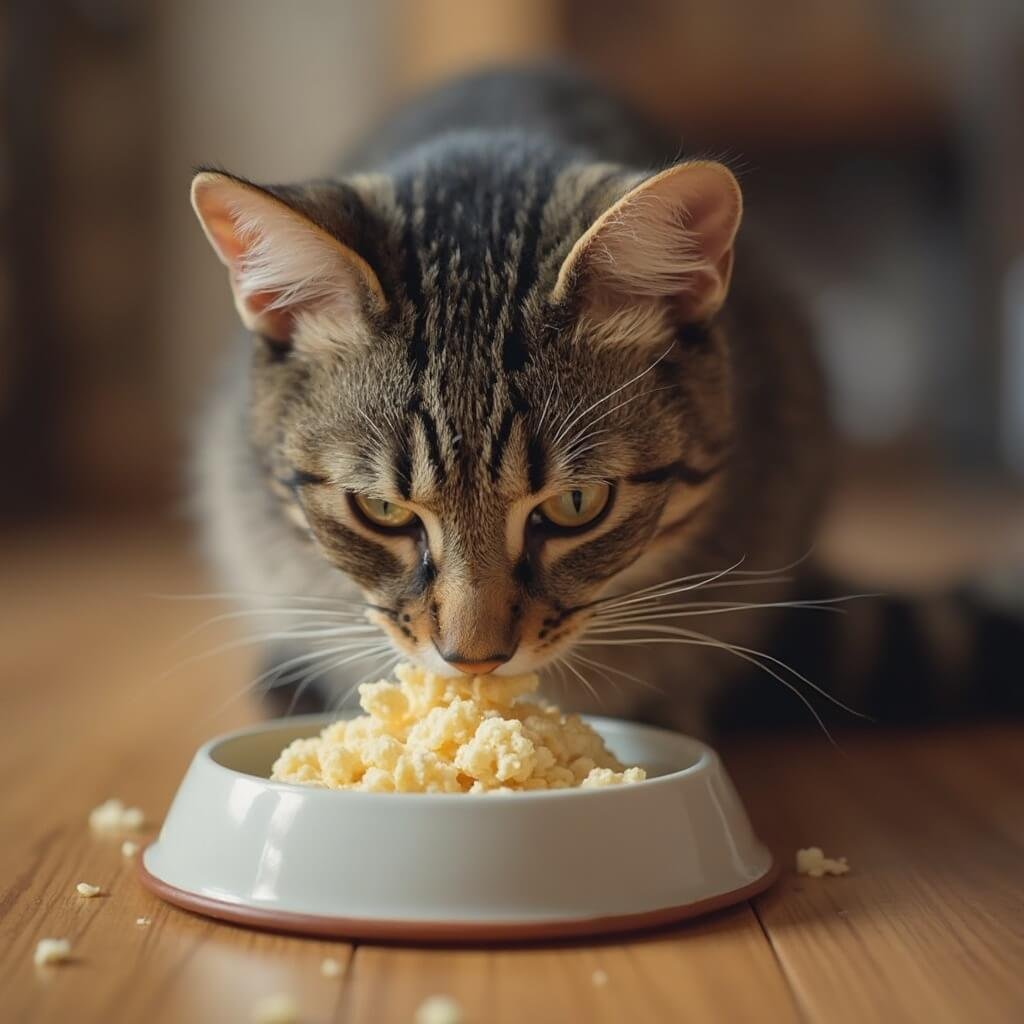
9. Serve 1–3 bites as a treat, or crumble a few over wet or dry food as a topper.
The first batch I made, I baked for 18 minutes because I was nervous about the egg. They came out like fish hockey pucks. Mose chewed one out of pity. Ten to twelve minutes is the sweet spot in my oven.
Crucial Tips
Storage
– Refrigerate in an airtight container; use within 5 days.
– Freeze in 2-day portions on a tray first, then bag them so they don’t fuse together. Thaw overnight in the fridge.

Mistakes that ruin it
– Sardines in oil, tomato sauce, or with added salt. Read the can.
– Undercooked egg white contains avidin, which blocks biotin absorption. Baking deactivates it. Don’t skip the oven.
– Pieces too big or too dense — cats prefer small thin bites they can crunch in one or two chews.
– Treating this as a full meal. It’s missing taurine guarantees, calcium ratios, and a feline vitamin-mineral premix. Feed alongside a complete commercial food, not instead of it.
Worthwhile variations
– Soft scramble version: Skip the oven. Cook the blended mix in a nonstick pan over low heat, stirring, until the egg sets. Mash and serve as a wet topper.
– Omega-3 boost: Add 2–3 drops of cat-safe fish oil after the bites have cooled. Heat damages omega-3s.
– Mixed protein: Replace half the sardines with finely minced cooked chicken breast. Useful if your cat shows mild fish sensitivity.
– Training treats: Bake longer at 325°F (160°C) for 18–20 minutes until properly dry and crisp. They hold up in a pocket during clicker sessions.
Allergy watch:
First time feeding fish or egg, give one bite and wait 24 hours. Itching, vomiting, or loose stool means stop. Mose handled it fine; my neighbor’s cat couldn’t tolerate the egg at all.
The sardine egg high protein cat meal is the topper most cats finish. The sardine is the part to keep.
