

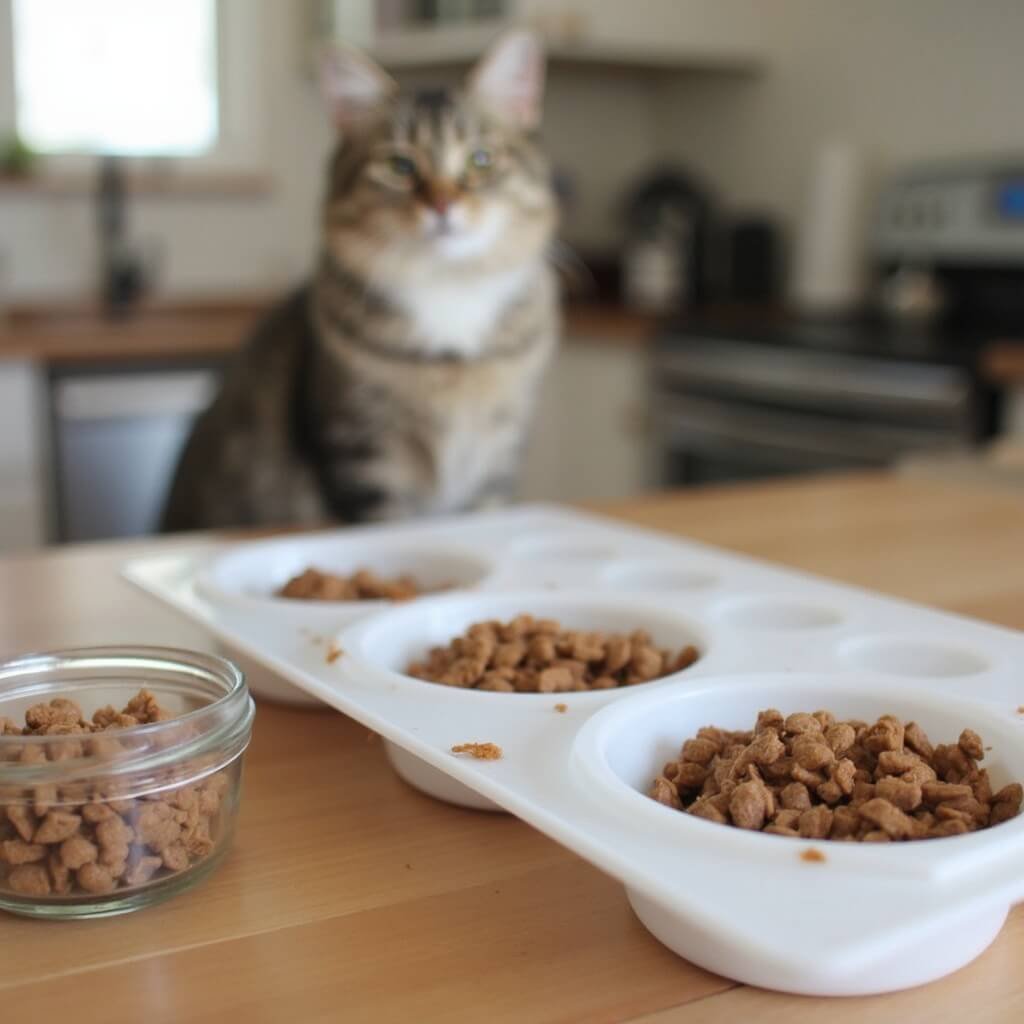
The chicken cauliflower low carb cat food was the bowl my cat finished first. It is a plain cook most cats take, and the cauliflower is the part to keep.
Can you actually feed your cat a chicken and cauliflower low-carb cat food without messing up their nutrition? Yes — but only if you treat the supplements as non-negotiable and keep the cauliflower as a tiny accent, not a main ingredient. I’ve been making this for my 11-pound tabby Miso for about two years, after my vet’s nutritionist sent me a formulation sheet I now keep laminated on the fridge.
This is the recipe I rotate through every couple of weeks. Skip the supplement portion and it’s a great topper. Use the full supplement stack (with vet guidance) and it works as a complete meal.
Key Info
Prep time: 20 minutes
Cook time: 15 minutes
Total time: 35 minutes plus cooling
Servings: 10–14 portions (from a ~2 lb batch, for a 10–12 lb adult cat)
Calories per portion: ~75 kcal
Fat: ~4.5 g | Protein: ~8 g | Carbs: <1 g
Difficulty: Moderate
Dietary tags: Grain-free, gluten-free, low-carb, high-protein
Equipment
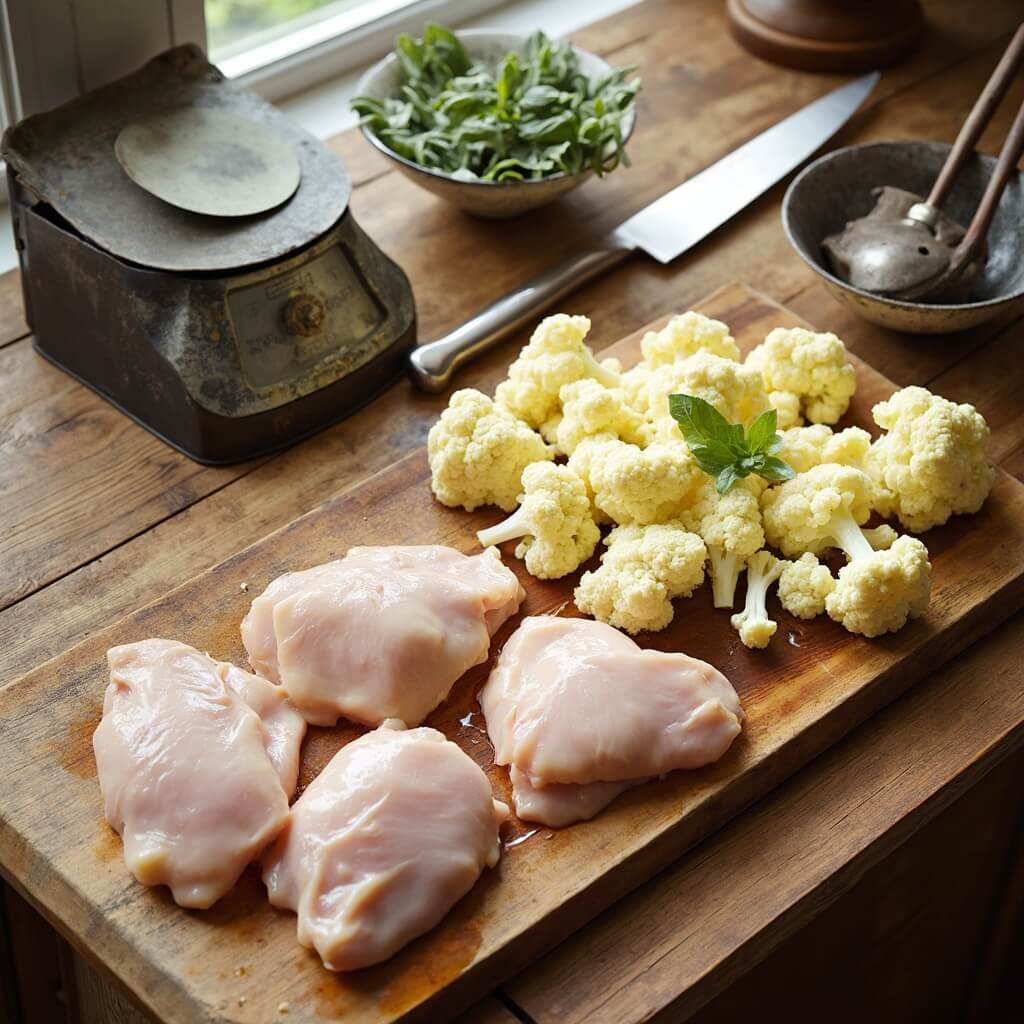
– Sharp chef’s knife and board
– Kitchen scale (the cheap digital kind is fine)
– Measuring spoons
– Food processor or a box grater for the cauliflower
– Heavy pan or skillet with a lid
– Instant-read thermometer — don’t skip this for poultry
– Airtight containers or silicone freezer molds
A grater works if you don’t own a processor. I used one for the first six months before I caved and bought a mini chopper.
Ingredients
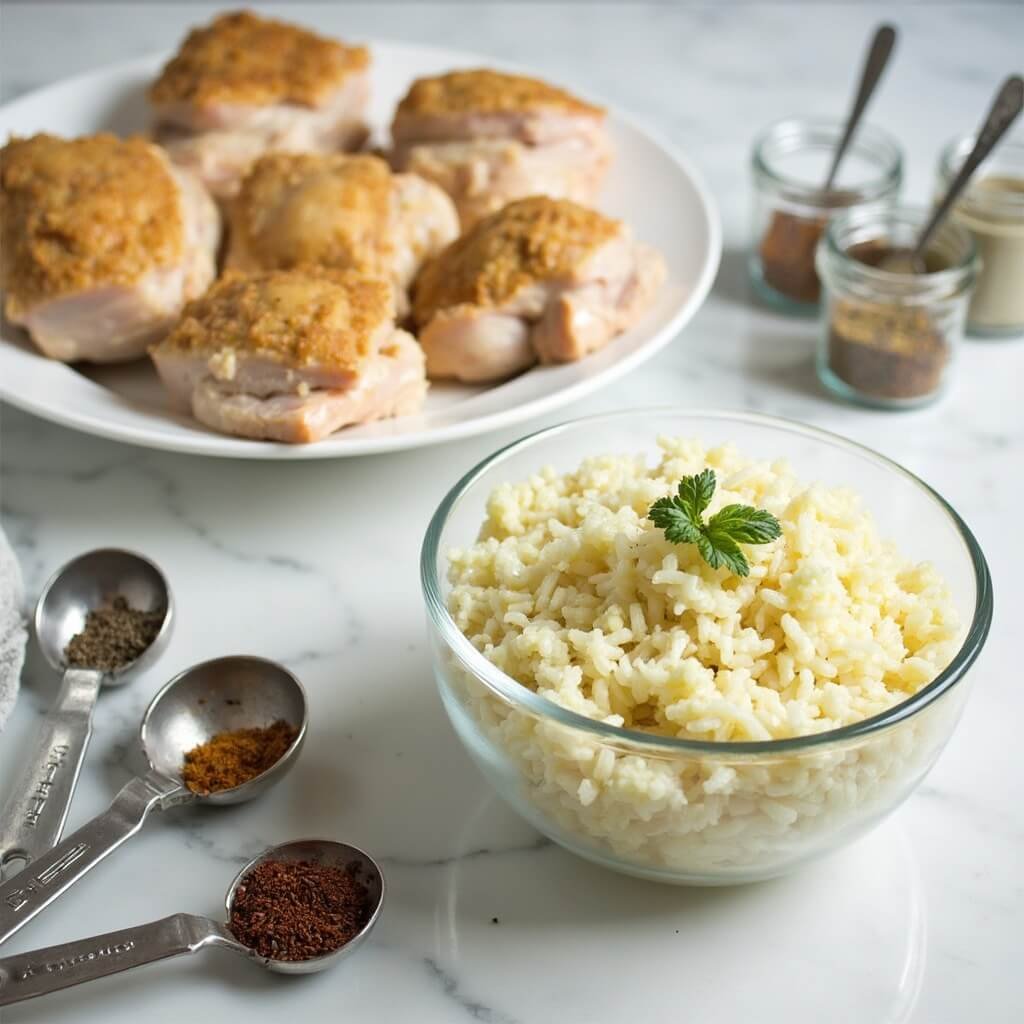
– 900 g (2 lb) boneless chicken thighs, skin on for most cats, off if your cat needs to lose weight
– 80 g (about 3 oz) cauliflower, finely riced — roughly 8% of the batch
– 200 ml (¾ cup + 1 tbsp) plain water or unsalted, onion/garlic-free chicken broth
– 1 tbsp rendered chicken fat (optional, for lean cuts)
– Taurine, calcium source, and feline multivitamin premix — dosed exactly per your vet/nutritionist’s formula
– Fish oil for omega-3s, dose per formula (skip if your cat reacts to fish)
No salt. No garlic. No onion. No “just a little” anything from your spice rack.
Method
1. Trim and cube the thighs into roughly 2 cm pieces so they cook evenly.
2. Rice the cauliflower in the processor until it looks like couscous. Larger pieces will get picked around.
3. Add the chicken to the pan with the broth. Cover and bring to a low simmer.
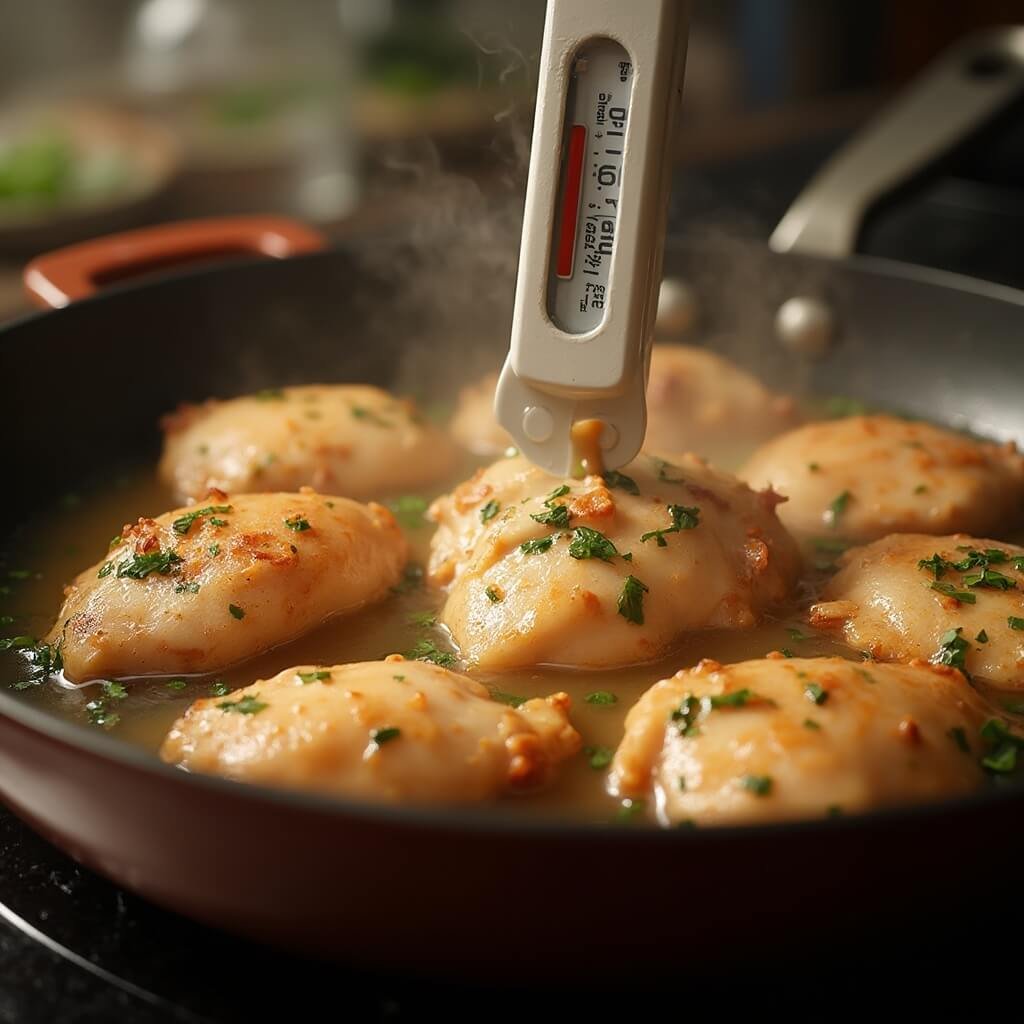
4. Poach gently for 8–10 minutes, until the thickest piece hits 74 °C / 165 °F internally. The meat should be opaque and the juices clear, but still moist — not stringy.
5. Add the riced cauliflower in the last 4 minutes. It’s ready when it mashes easily under a fork but isn’t falling apart.
6. Pull the pan off the heat. Let everything cool to barely warm — under 45 °C / 110 °F, or about 15–20 minutes on the counter. This protects heat-sensitive vitamins in the premix.
7. Pulse the mixture briefly in the processor for a coarse pâté, or shred by hand for a chunkier stew. Miso prefers chunky; my friend’s senior cat needs it blended smooth.
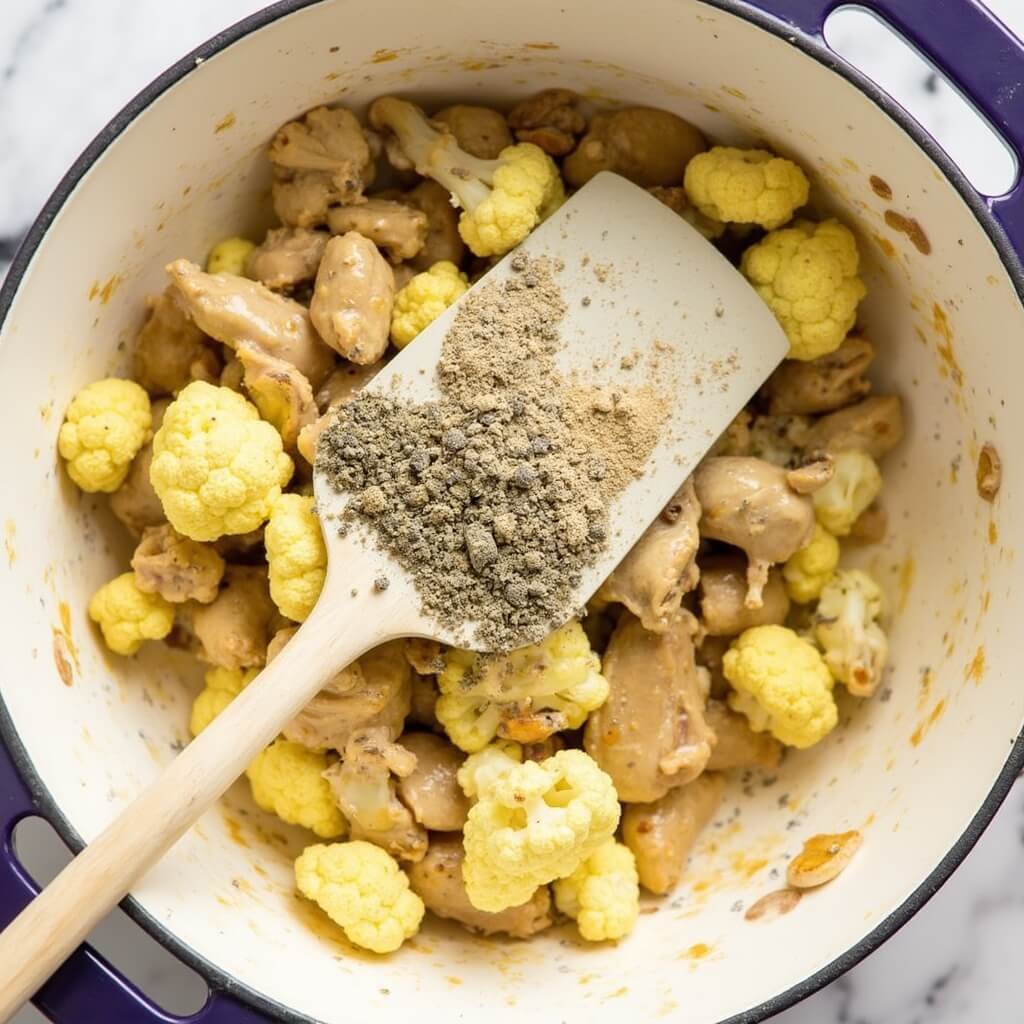
8. Stir in the chicken fat, then the pre-weighed supplements. Mix thoroughly — no dry pockets, no powder clumps. I use a silicone spatula and scrape the bowl twice.
9. Portion by weight into containers based on your cat’s daily calorie target.
10. Refrigerate what you’ll use in 2–3 days. Freeze the rest in single-meal molds.
What I Learned the Hard Way
The first batch I made, I dumped the premix into hot chicken straight off the stove. The B vitamins likely took a hit, and the smell turned weirdly metallic. Cool it first. Always.
I also tried 20% cauliflower once because the bag was open. Miso ate around it and had loose stools by evening. Keep cauliflower at 5–10% of the batch by weight, maximum.
Crucial Tips
– Storage: Fridge 2–3 days max. Freezer 2–3 months in portioned molds. Thaw overnight in the fridge, never on the counter.
– Reheating: Gentle water bath or 10 seconds in the microwave with a thorough stir. Lukewarm only.
– Transitioning: Mix in over 7–14 days, starting at about 10% of the bowl. Cats refuse abrupt changes, and their guts protest too.
– Scaling: Multiply everything — including supplements — by the same factor. Weigh supplements; don’t eyeball.
– Don’t free-feed: Anything left out past 1–2 hours goes in the bin.
– Variations worth trying: Swap chicken for turkey thigh or rabbit for rotation. For seniors, blend smooth and add extra broth. For weight loss, use breast meat and skip the added fat — but get the formula re-checked, because removing fat shifts the calorie density.
– The non-negotiable: Get an actual formulation from a veterinary nutritionist before this becomes your cat’s main diet. Taurine deficiency is silent until it isn’t, and once heart damage shows up, it’s often too late.
The chicken cauliflower low carb cat food is the cook most cats take. The cauliflower is the part to keep.
